
Are you trying to figure out whether TIG or MIG welding is right for your next project? Understanding the key differences between these two popular welding methods can save you time, money, and frustration.
You’ll discover how TIG and MIG welding work, their unique benefits, and which one suits your needs best. By the end, you’ll feel confident choosing the perfect welding technique to get the job done with precision and ease. Keep reading to unlock the secrets behind TIG and MIG welding!
Credit: www.longshengmfg.com
Welding Basics
Understanding the basics of welding is essential before diving into the differences between TIG and MIG welding. Welding joins metals by melting their edges and adding filler material to create a strong bond. Each welding method has unique tools, techniques, and best-use scenarios that impact the quality and style of your welds.
What Is Tig Welding?
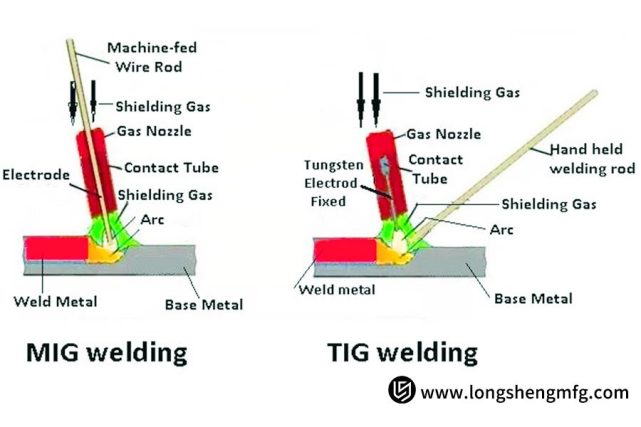
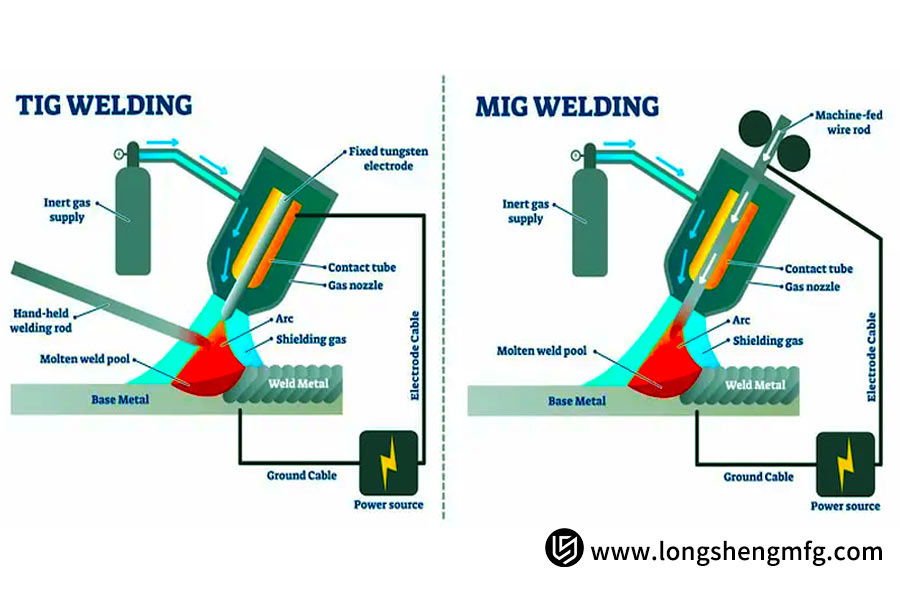
TIG welding, or Tungsten Inert Gas welding, uses a non-consumable tungsten electrode to produce the weld. You control the heat and filler material separately, which offers precise control over the weld. This method works well for thin materials and detailed work where accuracy matters most.
Because you manually add filler rod, TIG welding requires steady hands and good coordination. It’s popular in industries where weld appearance and strength are critical, like aerospace or automotive restoration. Have you ever tried welding something delicate and wished for more control? TIG might be the answer.
What Is Mig Welding?
MIG welding, or Metal Inert Gas welding, uses a continuously fed wire electrode that melts to form the weld. The process is faster and easier to learn than TIG, making it a go-to for beginners and general repair work. The wire feed means you don’t have to manually add filler material, speeding up the job.
This method works well for thicker metals and projects where speed is important, such as construction or fabrication. It’s less precise than TIG but more efficient for larger jobs. If you want to get a strong weld quickly without a steep learning curve, MIG welding could be your best choice.
Credit: www.longshengmfg.com
Equipment And Setup
Understanding the equipment and setup differences between TIG and MIG welding is key to choosing the right process for your project. Each method requires specific tools that affect how you prepare your workspace and handle the welding itself. Knowing these details helps you get started quickly and avoid costly mistakes.
Tig Welding Tools
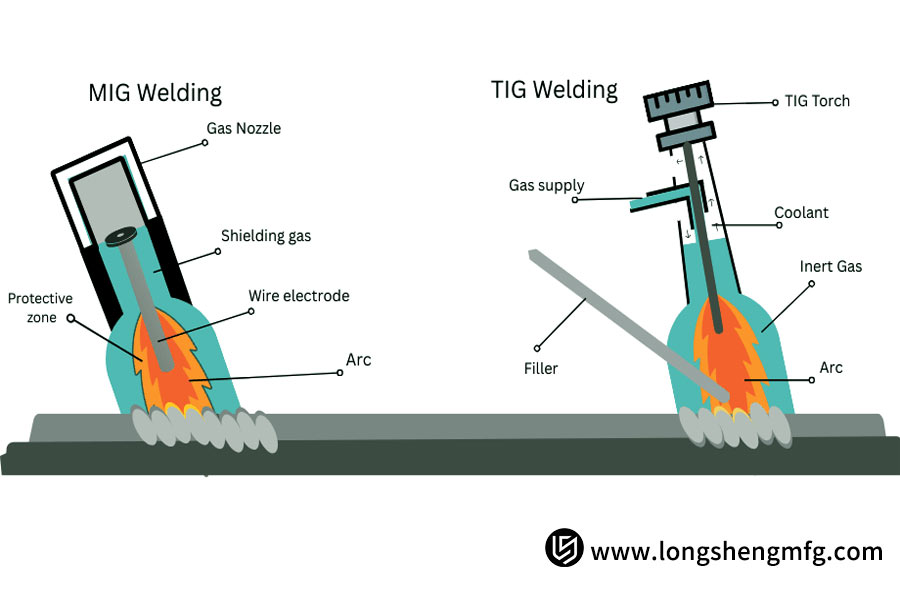
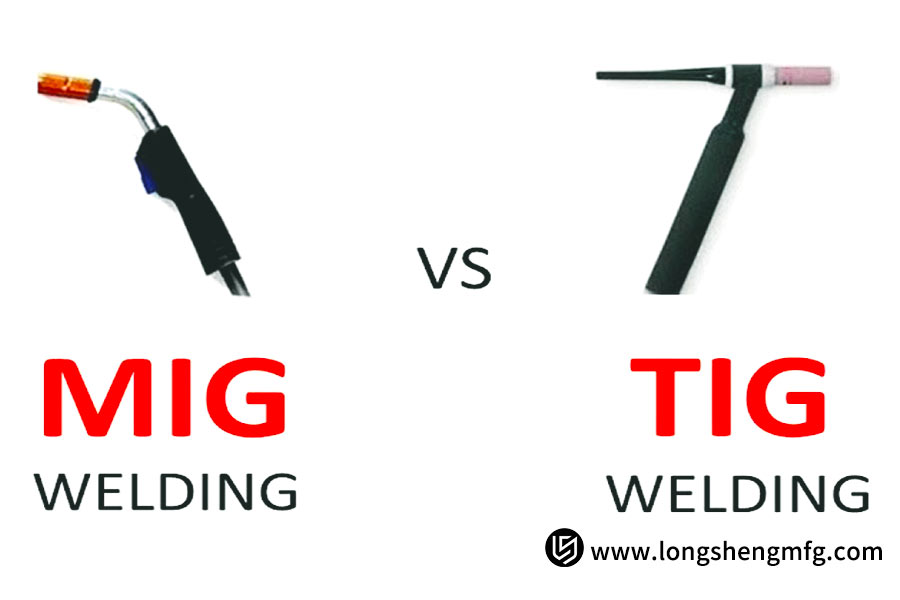
- TIG Torch:A handheld torch with a tungsten electrode that doesn’t melt during welding. You control the heat and filler material separately.
- Power Supply:A constant current welding machine designed to deliver precise control over amperage.
- Filler Rods:Added manually to the weld pool, offering more control over the weld bead.
- Argon Gas Cylinder:Provides an inert shielding gas to protect the weld from contamination.
- Foot Pedal or Hand Control:Allows you to regulate the welding current dynamically, which is crucial for delicate work.
Setting up TIG welding can feel intricate due to the number of components you must coordinate. But this setup grants you exceptional precision, ideal for thin metals and detailed projects. Ever tried adjusting your heat with just a dial and noticed how much difference it makes?
Mig Welding Tools
- MIG Gun:A gun that feeds a continuous wire electrode and releases shielding gas simultaneously.
- Power Supply:Typically a constant voltage machine designed for ease of use and faster welding speeds.
- Wire Spool:Holds the consumable wire that melts to form the weld.
- Shielding Gas Cylinder:Usually a mix of argon and CO2 to protect the weld pool.
- Wire Feeder:Mechanism that automatically feeds the wire through the MIG gun.
MIG welding setup is more straightforward and faster to get running, making it a favorite for beginners and production work. The continuous wire feed means less stopping and starting, which can improve your workflow. Have you noticed how much more efficient your projects become when your equipment just keeps going?
Process Differences
Understanding the process differences between TIG and MIG welding can help you choose the right technique for your project. Each process has unique steps and tools that affect the weld quality and ease of use. Let’s break down how each process works and what you can expect when using them.
Tig Welding Process
TIG welding uses a non-consumable tungsten electrode to create the weld. You manually feed a filler rod into the weld pool, giving you precise control over the amount of filler metal. This makes TIG welding perfect for thin materials and detailed work.
The process requires a shielding gas, usually argon, to protect the weld from contamination. Because you control both the torch and the filler rod, TIG welding demands steady hands and patience. Have you noticed how this method allows for cleaner, more aesthetically pleasing welds compared to other types?
Mig Welding Process
MIG welding feeds a continuous wire electrode through a welding gun automatically. This wire melts and joins the metals while a shielding gas protects the weld area. The continuous wire feed makes MIG welding faster and easier to learn for beginners.
This process works well for thicker metals and larger projects where speed is important. The automatic feed reduces the need for manual filler addition, so you can focus more on guiding the weld. Do you think the speed of MIG welding could improve your project timelines without sacrificing too much quality?
Material Compatibility
Material compatibility is a key factor when choosing between TIG and MIG welding. Each welding method interacts differently with metals, affecting the quality and strength of your weld. Understanding which materials work best with TIG or MIG can save you time and improve your project’s outcome.
Materials For Tig Welding
TIG welding excels with thin metals and those that require precision. You can weld stainless steel, aluminum, magnesium, and copper with clean, strong results.
If you’ve ever tried welding aluminum with MIG, you might notice it’s tricky to get a smooth finish. TIG allows better control of heat input, reducing warping and burn-through on delicate metals.
Are you working on a project where appearance matters? TIG welding often leaves a cleaner, more polished look without much spatter. This makes it popular for automotive and aerospace applications.
Materials For Mig Welding
MIG welding is more forgiving and faster, especially on thicker metals. It works well with carbon steel, mild steel, and sometimes stainless steel.
If your project involves heavy-duty steel structures or repairs, MIG is usually the go-to choice. Its continuous wire feed lets you cover large areas quickly without stopping frequently.
However, MIG isn’t ideal for very thin or exotic metals like titanium or thin aluminum sheets. You might end up with more weld spatter or burn-through compared to TIG.
Skill Requirements
Understanding the skill requirements for TIG and MIG welding can help you decide which technique suits your abilities and project needs. Each welding type demands different levels of precision and practice, affecting how quickly you can become proficient. Let’s break down what expertise you need for each method so you can assess where your strengths lie.
Expertise For Tig
TIG welding requires a high level of hand-eye coordination and steady control. You need to manage the torch with one hand while adding filler material with the other, all while maintaining a consistent arc length.
This method demands patience and fine motor skills because even slight movements can affect weld quality. If you enjoy detailed, precise work and don’t mind a slower pace, TIG might be your best match.
Many professionals spend months practicing TIG to master its complexity. Do you have the patience to develop this level of skill? It’s a rewarding process if you want clean, strong welds on thin materials.
Expertise For Mig
MIG welding is generally easier to learn and faster to perform. It uses a continuous wire feed, so you only need to focus on guiding the gun along the joint.
This simplicity makes MIG welding ideal for beginners and large projects where speed matters. You don’t have to worry as much about coordinating both hands or maintaining precise control.
However, MIG still requires practice to maintain consistent speed and angle for strong welds. Are you ready to develop a steady hand and quick reflexes? With some effort, you can achieve solid results in less time compared to TIG.
Cost Considerations
Cost plays a vital role in choosing between TIG and MIG welding. Each method has different expenses tied to equipment, materials, and operation. Understanding these costs helps in picking the best option for your budget and project needs.
Tig Welding Costs
TIG welding machines usually cost more than MIG welders. The equipment requires precise controls and often includes a high-frequency start. This adds to the initial price.
The welding process needs high-quality tungsten electrodes, which must be replaced regularly. Also, shielding gas like argon is essential, increasing ongoing costs.
TIG welding demands skilled operators. Training expenses and slower welding speeds can raise labor costs. This method suits projects where quality matters more than speed.
Mig Welding Costs
MIG welding machines are generally more affordable and easier to use. They suit beginners and allow faster work, saving labor time and cost.
The wire electrode used in MIG welding is cheaper and comes in spools. Shielding gas mixtures may vary, but costs remain moderate.
Maintenance is simpler and less frequent. This lowers long-term expenses. MIG welding works well for large jobs and production work where speed counts.
Common Applications
Understanding where TIG and MIG welding shine in real-world tasks helps you pick the right tool for your project. Each welding type suits different materials, precision levels, and production speeds. Knowing their common applications can save you time and money while improving your results.
Tig Welding Uses
TIG welding is ideal when you need clean, precise welds. It works great on thin metals and delicate parts where detail matters.
- Aircraft and aerospace components where strength and appearance are critical
- Automotive bodywork and restoration for smooth, rust-free joints
- Artistic metal sculptures that demand fine control and minimal spatter
- Food and pharmaceutical equipment requiring sanitary, contamination-free welds
If you’ve ever tried TIG welding, you know how much control you get. This makes it perfect for projects where every millimeter counts.
Mig Welding Uses
MIG welding is a go-to for fast, strong welds on thicker materials. It’s popular in industries where speed and efficiency matter most.
- Construction sites for steel frameworks and heavy machinery
- Automotive manufacturing lines producing large volumes of parts
- Repair shops fixing metal equipment and farm tools quickly
- Shipbuilding where durable welds withstand tough conditions
Ever faced a deadline that required quick fixes? MIG welding often comes to the rescue, balancing speed with solid results. Which welding method fits your current projects better?
Advantages And Disadvantages
Understanding the advantages and disadvantages of TIG and MIG welding helps in choosing the right method. Each technique offers unique benefits and faces certain limitations. This knowledge guides welders to match the process with their project needs and skill level.
Pros And Cons Of Tig
- Pros:
- Produces clean, precise welds with a smooth finish.
- Allows welding of thin materials without burn-through.
- Works well on a variety of metals, including aluminum and stainless steel.
- Gives better control over the welding process.
- Cons:
- Slower welding speed compared to MIG.
- Requires higher skill and practice to master.
- Equipment tends to be more expensive and complex.
- Not ideal for thick materials or outdoor use.
Pros And Cons Of Mig
- Pros:
- Faster welding speed makes it efficient for big jobs.
- Easy to learn, suitable for beginners.
- Good for welding thick metals and heavy materials.
- Equipment is generally simpler and less costly.
- Cons:
- Welds can be less precise with more spatter.
- Not ideal for thin metals due to risk of burn-through.
- Less control over the weld bead shape.
- Shielding gas use limits outdoor welding without wind protection.
Credit: www.longshengmfg.com
Frequently Asked Questions
What Is The Main Difference Between Tig And Mig Welding?
TIG welding uses a non-consumable tungsten electrode and requires filler material. MIG welding uses a consumable wire electrode that acts as both electrode and filler.
Which Welding Method Is Better For Beginners, Tig Or Mig?
MIG welding is easier for beginners due to its faster speed and simpler technique compared to TIG welding’s precision requirements.
Can Tig Welding Be Used On All Metal Types?
TIG welding works well on a wide range of metals including steel, aluminum, and stainless steel, offering high-quality welds.
Is Mig Welding More Suitable For Large-scale Projects?
Yes, MIG welding is faster and more efficient, making it ideal for large projects and thicker materials.
Conclusion
TIG and MIG welding each have clear strengths and uses. TIG offers more control and precision for detailed work. MIG welding works faster and is easier for beginners. Choosing the right method depends on your project needs. Both types help create strong, lasting welds.
Understanding their differences makes welding simpler and safer. You can pick the best tool with confidence. Welding skills grow with practice and good knowledge. Keep learning and trying to improve your craft.
About The Author

