
Are you trying to figure out which welder suits your needs best—TIG or MIG? Choosing the right welder can make a huge difference in your projects, whether you’re a beginner or an experienced metalworker.
Understanding the key differences between TIG and MIG welding will help you save time, money, and frustration. You’ll discover how each welder works, their unique benefits, and which one fits your skills and goals. Keep reading to find the perfect match for your next welding adventure!
Credit: www.longshengmfg.com
Tig Welding Basics
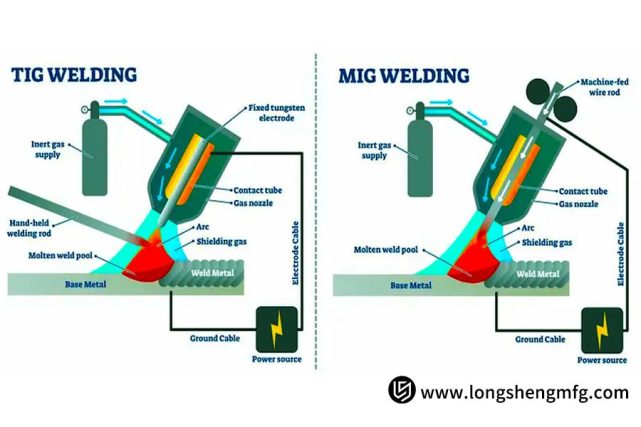
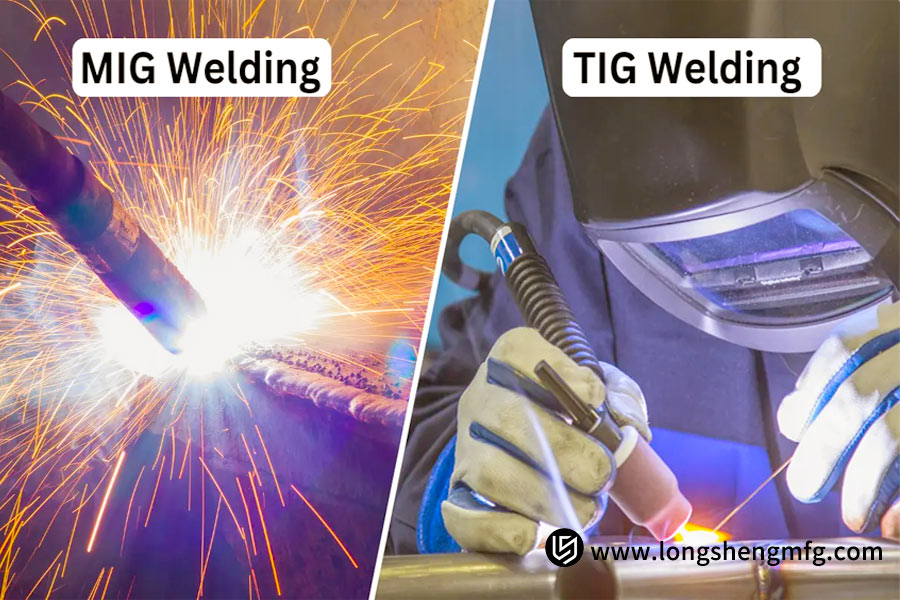
TIG welding is a precise and clean welding process. It uses a non-consumable tungsten electrode to create the weld. This method allows great control over the heat and filler material. TIG welding produces strong, high-quality joints with a smooth finish. It is popular in industries needing detailed work and fine craftsmanship.
Definition And Process
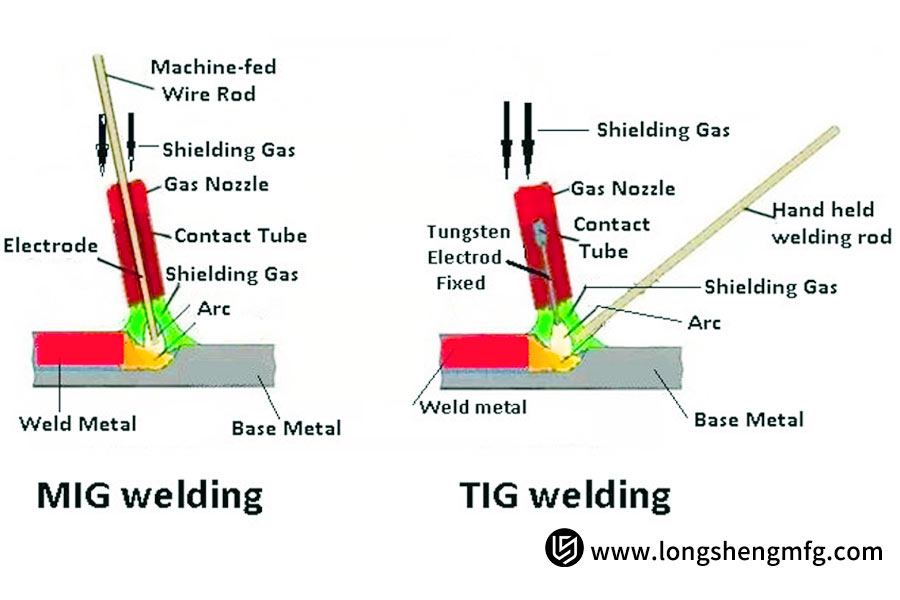
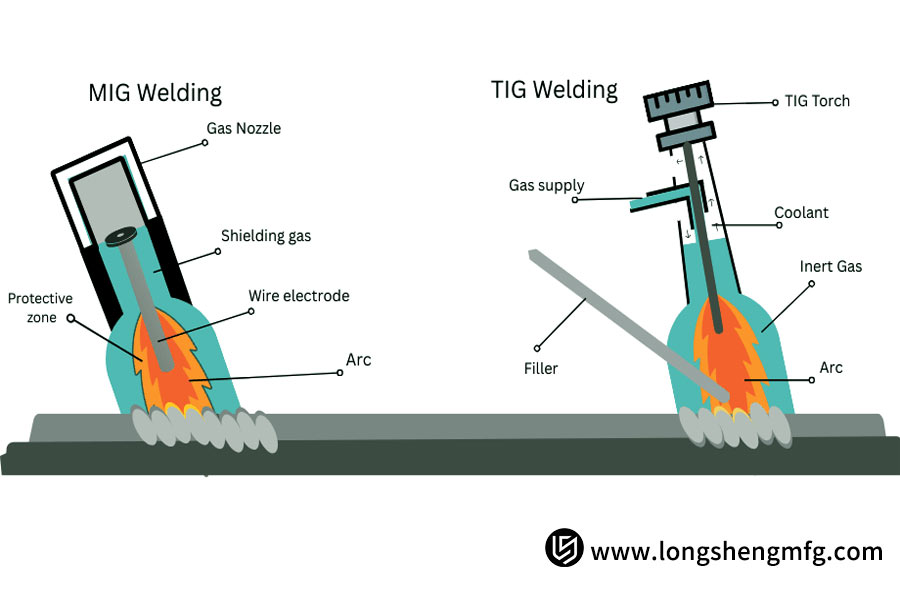
TIG stands for Tungsten Inert Gas welding. The process uses a tungsten electrode to produce the arc. An inert gas, usually argon, shields the weld area. This prevents contamination from air and moisture. The welder may add filler metal manually if needed. The heat melts the base metal and filler, creating a strong joint.
Applications And Uses
- Used in aerospace and automotive industries
- Ideal for thin metals like stainless steel and aluminum
- Common in art and sculpture metalwork
- Widely used for pipe welding and tubing
Advantages Of Tig Welding
- Produces clean, precise welds with minimal spatter
- Allows excellent control over heat and weld pool
- Works well on thin materials without warping
- Creates strong, high-quality joints
- Does not require flux, reducing post-weld cleaning
Limitations Of Tig Welding
- Slower process compared to MIG welding
- Requires more skill and practice to master
- Not ideal for thick or heavy materials
- Equipment can be more expensive and complex
- Less suitable for outdoor use due to gas shielding
Credit: www.longshengmfg.com
Mig Welding Basics
MIG welding is a popular technique that many beginners and professionals use because of its simplicity and efficiency. Understanding the basics can help you decide if MIG welding fits your project needs or skill level. Let’s break down what makes MIG welding tick and why it’s a go-to choice for many.
Definition And Process
MIG stands for Metal Inert Gas welding. It uses a continuous wire electrode that feeds through a welding gun, melting and joining metals as you work.
The process involves shielding the weld pool from contamination using an inert gas, usually argon or a mix of argon and carbon dioxide. This gas protects the weld from oxidation and other atmospheric issues.
Think of it as a steady stream of metal being deposited and shielded simultaneously, creating a strong bond. Have you noticed how smooth and fast the wire feeds in a MIG welder? That’s what makes it efficient.
Applications And Uses
MIG welding is widely used in automotive repair, construction, and manufacturing. It’s especially handy for welding thin to medium thickness metals like steel and aluminum.
If you’ve ever seen someone fix a car frame or build a metal fence, chances are they were using MIG welding. It’s also common in hobbyist workshops due to its ease of use.
Does your project involve quick, clean welds on various metals? MIG welding might be the tool for you.
Advantages Of Mig Welding
- Speed:Continuous wire feed means faster welding compared to other methods.
- Ease of learning:Less technique-sensitive, making it ideal for beginners.
- Versatility:Works well on a variety of metals and thicknesses.
- Clean welds:Minimal spatter means less cleanup after welding.
When I first tried MIG welding, I was surprised at how quickly I could produce strong, clean welds. It saved me hours on a project compared to stick welding.
Limitations Of Mig Welding
- Outdoor use:Shielding gas can be blown away by wind, making it less effective outside.
- Equipment cost:MIG welders and gas tanks can be more expensive upfront.
- Material thickness:Not ideal for very thick metals without multiple passes.
Have you ever struggled with a MIG weld that kept spattering or didn’t stick well? Often, it’s due to poor gas coverage or wrong settings. Knowing these limits helps you avoid common mistakes.
Comparing Tig And Mig Welding
Comparing TIG and MIG welding helps choose the right tool for your project. Both methods join metals but use different techniques. Understanding their differences makes welding easier and more effective.
Ease Of Use
MIG welding is simple for beginners. It uses a continuous wire feed that melts and joins metals quickly. TIG welding needs more skill. It requires steady hands to control the torch and filler rod separately. For quick learning and straightforward jobs, MIG is better.
Material Compatibility
TIG welding works well on thin metals like aluminum and stainless steel. It gives precise, clean welds without much spatter. MIG welding suits thicker metals like mild steel. It can weld faster but may create more mess. Choose TIG for detail and MIG for heavy-duty tasks.
Speed And Efficiency
MIG welding is faster because the wire feeds automatically. It finishes jobs quickly, saving time on big projects. TIG welding takes longer since it requires manual filler feeding. It is slower but produces strong, neat welds. Speed matters more in production work.
Cost Considerations
MIG welders usually cost less and need fewer accessories. They are good for hobbyists and small workshops. TIG welders are pricier and need more equipment like gas tanks. Maintenance can also be higher. Budget and project type affect your choice.
Choosing The Right Welder
Choosing the right welder is crucial for any welding project. The type of welder affects the quality, speed, and cost of your work. Both TIG and MIG welders serve different purposes. Understanding their differences helps in selecting the best one for your needs.
Project Requirements
Think about the materials you will weld. TIG welders work well with thin metals like aluminum and stainless steel. They provide precise, clean welds. MIG welders are better for thicker metals and faster welding. They handle steel and other heavy-duty materials easily.
Consider the environment too. TIG welding suits indoor, detailed work. MIG welding fits outdoor and large projects. The choice depends on the job size and metal type.
Skill Level
TIG welding needs more skill and steady hands. It requires practice to control the torch and filler rod. Beginners might find TIG welding challenging.
MIG welding is easier to learn. It uses a wire feed, making it simpler to control. This makes MIG welders a good choice for beginners and hobbyists.
Budget Constraints
TIG welders usually cost more upfront. They need extra equipment like gas tanks. Maintenance and consumables can add to the expense.
MIG welders are generally more affordable. They have simpler setups and lower running costs. For tight budgets, MIG welding is often the better option.
Safety Considerations
Safety is a critical factor to consider when choosing between TIG and MIG welding. Both methods involve risks such as electric shock, intense UV light, and harmful fumes. Understanding the safety measures specific to each welding type can protect you from injuries and long-term health issues.
Protective Gear
Your protective gear must be suited to the welding process you use. TIG welding often requires thicker gloves because it involves higher heat and precision. MIG welding, on the other hand, needs gloves that offer flexibility since you handle the wire feed continuously.
Regardless of the method, always wear a welding helmet with the correct shade to shield your eyes from UV radiation. Flame-resistant clothing and closed-toe boots are also essential to protect your skin from sparks and hot metal.
Work Environment
Ventilation plays a huge role in your safety. MIG welding produces more fumes due to the flux core, so you need a well-ventilated space or even a fume extractor. TIG welding generates fewer fumes but still requires good airflow to avoid inhaling harmful gases.
Keep your workspace clean and free of flammable materials. Sparks from either welding process can ignite unexpected fires, so always have a fire extinguisher nearby. Are you checking your area regularly to maintain a safe zone?
Common Safety Practices
- Inspect your equipment before use to avoid electrical hazards.
- Never weld in wet or damp conditions to reduce the risk of shock.
- Maintain a proper grounding setup for your welder.
- Keep bystanders at a safe distance or shield them with welding curtains.
- Take breaks to avoid fatigue, which can lead to mistakes and accidents.
Have you ever skipped a safety check thinking it would save time? Small oversights can cause serious accidents. Prioritize safety to keep your welding projects successful and injury-free.
Credit: www.longshengmfg.com
Frequently Asked Questions
What Is The Main Difference Between Tig And Mig Welding?
TIG welding uses a non-consumable tungsten electrode and requires filler metal. MIG welding uses a consumable wire electrode that acts as filler metal. TIG provides precise, clean welds, while MIG is faster and easier for thicker metals.
Which Welder Is Better For Beginners, Tig Or Mig?
MIG welding is generally better for beginners due to its simplicity and speed. TIG welding requires more skill and control. Beginners can quickly learn MIG and produce strong welds, while TIG demands practice for precision and technique.
Can Tig And Mig Welders Be Used On The Same Metals?
Both TIG and MIG welders can work on steel, aluminum, and stainless steel. However, TIG is preferred for thin metals and detailed work. MIG is better for thicker metals and faster welding tasks.
Which Welding Method Produces Stronger Joints, Tig Or Mig?
TIG welding creates stronger, more precise joints due to better control over heat and filler metal. MIG welding produces strong joints quickly but with less precision. Strength depends on skill and correct technique in both methods.
Conclusion
TIG and MIG welders serve different needs in welding projects. TIG welders offer precise control for thin metals and detailed work. MIG welders work faster and suit thicker metals and larger tasks. Choosing the right welder depends on your project’s material and skill level.
Both have unique strengths and fit various jobs well. Understanding these differences helps you pick the best tool. This makes welding easier and improves your results. Keep these points in mind for smarter welding choices.
About The Author

