

If you’re diving into welding, choosing the right flux core welding wire can make all the difference in your work’s strength and finish. But with so many types out there, how do you know which one fits your project best?
Understanding the different types of flux core welding wire will save you time, reduce mistakes, and boost your confidence every time you pick up your welder. Keep reading to discover which wire matches your needs perfectly and helps you achieve professional results with ease.
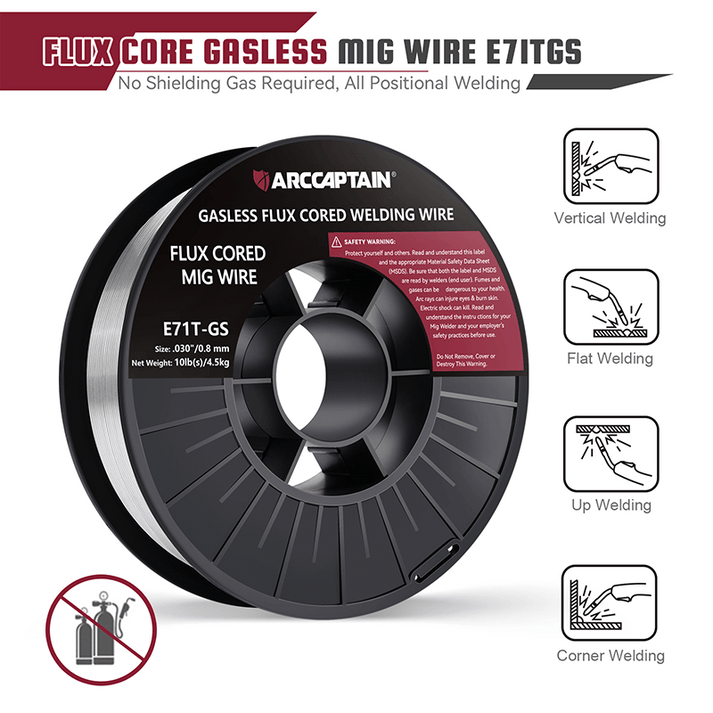
Credit: www.arccaptain.com
Flux Core Welding Basics
Flux core welding is a popular technique used in metal fabrication and repair. It uses a special type of wire designed to simplify the welding process. Understanding the basics of flux core welding helps beginners and professionals work more efficiently and achieve better results.
What Is Flux Core Wire
Flux core wire is a hollow wire filled with flux material. The flux creates a protective gas shield during welding. This shield protects the weld from contamination by air. The wire melts and fuses metal pieces together as it feeds through the welding gun. Flux core wire comes in different types for various welding needs.
How Flux Core Welding Works
Flux core welding uses an electric arc to melt the wire and base metal. The flux inside the wire burns and produces gas. This gas shields the weld pool from oxygen and nitrogen. The molten flux forms slag on top of the weld. The slag cools and protects the weld until it solidifies. After welding, the slag can be chipped away easily.
Benefits Of Flux Core Wire
- Works well outdoors and in windy conditions
- Requires less cleaning of the metal surface
- Produces deep weld penetration
- Allows faster welding speed
- Reduces need for external shielding gas
Self-shielded Flux Core Wire
Self-shielded flux core wire is a popular choice for welders who need portability and convenience without the hassle of external shielding gas. This type of wire contains a flux core that produces its own shielding gas when heated, protecting the weld pool from contamination. If you’re working outdoors or in windy conditions, this wire can be a game-changer because it allows you to weld without worrying about gas blowing away.
Key Features
- No need for external shielding gas:The flux core generates its own protective gas during welding.
- Good penetration:It provides deep weld penetration, making it effective for thicker materials.
- Works well outdoors:Ideal for windy or drafty environments where gas-shielded welding struggles.
- Produces slag:A layer of slag forms over the weld and must be chipped away after welding.
- Typically used with DC power sources:Most self-shielded wires require direct current for optimal performance.
Common Applications
You’ll find self-shielded flux core wire widely used in construction sites, farm repairs, and heavy equipment maintenance. It’s perfect when you can’t set up gas tanks or when movement is frequent. Many welders prefer it for quick fixes on steel structures or pipelines outdoors.
Have you ever struggled with gas tanks on a windy day? This wire lets you skip that problem entirely. It’s also handy in remote locations where carrying extra equipment isn’t practical.
Advantages And Limitations
| Advantages | Limitations |
|---|---|
|
|
Would you choose convenience over a perfectly clean weld? Self-shielded flux core wire offers a practical solution when conditions aren’t ideal for gas-shielded welding. Knowing its strengths and weaknesses helps you decide if it fits your project needs.
Gas-shielded Flux Core Wire
Gas-shielded flux core wire is a popular type of welding wire. It combines the benefits of flux core welding with an external shielding gas. This wire type offers cleaner welds and better control over the welding process. It is widely used in industrial and construction settings.
Characteristics
- Contains a flux core for slag formation and arc stabilization
- Requires an external shielding gas like CO2 or argon mix
- Produces less smoke and spatter than self-shielded wire
- Offers deeper penetration and stronger welds
- Works well on thicker metals and outdoor projects
Typical Uses
- Heavy equipment and machinery repair
- Shipbuilding and marine applications
- Structural steel fabrication
- Automotive and truck frame welding
- Pipe welding and pressure vessel construction
Pros And Cons
| Pros | Cons |
|---|---|
| Cleaner welds with less slag | Requires external gas supply |
| Better weld quality and strength | Higher equipment cost |
| Reduced spatter and smoke | Less portable due to gas tanks |
| Good for thick materials | Needs more skill to operate |
Metal-cored Welding Wire
Metal-cored welding wire stands out in the flux core welding world for its unique construction and impressive performance. Unlike traditional solid or flux-cored wires, this type blends metal and flux elements to offer a balanced welding experience. If you’re looking for a wire that combines strength with efficiency, metal-cored wire might be your go-to choice.
Composition And Design
Metal-cored wire consists of a tubular outer metal sheath filled with metal powders rather than flux. This design reduces slag formation and enhances weld quality. The metal powders inside improve the wire’s mechanical properties and provide better arc stability.
The outer metal sheath ensures smooth feeding through the welding gun, which reduces interruptions during your work. Its composition often includes elements like iron, manganese, and sometimes small amounts of alloying metals to tailor the weld’s characteristics. This combination makes the wire versatile for many welding tasks.
Performance Benefits
One of the biggest advantages of metal-cored wire is its ability to produce cleaner welds with minimal slag. This means less time spent on cleaning and finishing after welding. You also get deeper penetration and higher deposition rates, which can speed up your projects.
Metal-cored wire tends to generate less smoke and fumes, making your work environment healthier. Its consistent arc performance helps you maintain control, especially on thicker materials. Have you noticed how smoother wire feeding can improve your overall welding rhythm? Metal-cored wire delivers just that.
Where To Use Metal-cored Wire
Metal-cored wire is ideal for welding thicker steel sections where strength is crucial. It works well in structural applications like bridges, buildings, and heavy equipment repair. If you’re handling fabrication that demands high-quality welds with less post-weld cleanup, this wire fits perfectly.
This wire is also a smart choice in automated or semi-automated welding setups because it feeds consistently and supports high welding speeds. Do you often switch between welding positions? Metal-cored wire adapts well to flat, horizontal, and vertical welding tasks, offering flexibility for various projects.
Specialty Flux Core Wires
Specialty flux core wires serve unique roles in welding tasks. These wires offer specific properties tailored to different metal types and welding conditions. They improve weld quality, strength, and resistance to defects. Choosing the right specialty wire helps meet project demands with precision and efficiency.
Low Hydrogen Wires
Low hydrogen wires reduce hydrogen in the weld pool. This lowers the risk of cracks and porosity. They work well for welding thick metals and critical structures. These wires keep welds strong and clean in harsh environments.
High Strength Wires
High strength wires provide extra tensile strength to welds. They help build joints that endure heavy loads. These wires are ideal for construction and heavy machinery. They improve durability without adding extra weight.
Other Specialty Types
- Metal-cored wires: Deliver better deposition rates and cleaner welds.
- Self-shielded wires: Do not require external gas, useful outdoors.
- Stainless steel flux core wires: Offer corrosion resistance for harsh environments.
- Aluminum flux core wires: Designed for welding aluminum with good control.
Each specialty wire suits a particular job. Proper selection enhances weld performance and longevity.

Credit: www.amazon.ca
Choosing The Right Flux Core Wire
Choosing the right flux core welding wire affects weld quality and efficiency. The type of wire depends on the metal you weld, your welding position, and your budget. Selecting the correct wire ensures strong, clean welds and reduces defects. Understanding key factors helps pick the best wire for your project.
Material Compatibility
Match the flux core wire to the metal type. Mild steel requires a different wire than stainless steel or aluminum. Using the right wire prevents poor welds and weak joints. Check the wire specifications for metal compatibility before buying. This step helps avoid welding problems and improves results.
Welding Position Considerations
Different wires work better in certain welding positions. Flat and horizontal welding allows more wire options. Vertical and overhead welding need wires that produce less spatter and better control. Choose a wire designed for the position you weld in most. It makes the welding process smoother and safer.
Cost And Efficiency Factors
Consider both cost and welding efficiency. Some wires cost more but save time with faster welding speeds. Others are cheaper but create more slag and need extra cleaning. Balance your budget with productivity needs. Buying the right wire reduces wasted material and time on repairs.
Maintenance And Storage Tips
Keeping your flux core welding wire in top shape requires attention to maintenance and storage. Neglecting these aspects can lead to rust, poor weld quality, and wasted materials. Let’s break down simple yet effective ways to protect your investment and improve your welding results.
Proper Handling
Always handle flux core wire with clean, dry hands or gloves to prevent oils and moisture from contaminating the wire. Avoid dropping or banging the wire spool, as this can deform or damage the wire, causing feeding issues during welding.
Think about the last time your wire tangled or jammed—was it because it was mishandled? Keeping the wire straight and carefully feeding it into the welder reduces frustration and downtime.
Storage Conditions
Store your flux core wire in a cool, dry place away from humidity and dust. Moisture is the enemy here—it causes rust that ruins wire conductivity and weld quality.
- Use airtight containers or sealed plastic bags to protect opened spools.
- Keep wire off the ground to avoid exposure to moisture and dirt.
- Label spools with purchase dates to track their age and usability.
Have you ever pulled out a wire spool only to find it rusted? Proper storage can save you from that expensive disappointment.
Extending Wire Life
To make your flux core wire last longer, consider investing in a wire feeder with a sealed compartment. This keeps the wire shielded from contaminants during use.
Regularly clean your wire feeder and nozzle to prevent buildup that can affect wire feeding and weld quality. Also, avoid exposing the wire to extreme temperatures that could alter its properties.
Small habits, like rewinding partially used wire spools and sealing them immediately, can make a big difference. How much time and money could you save by stretching the life of every spool?

Credit: www.arccaptain.com
Frequently Asked Questions
What Are The Main Types Of Flux Core Welding Wire?
Flux core welding wire mainly includes self-shielded and gas-shielded types. Self-shielded wires generate their own gas from flux. Gas-shielded wires require external shielding gas. Each type suits different welding conditions and materials.
How Does Self-shielded Flux Core Wire Work?
Self-shielded flux core wire contains flux that produces protective gas during welding. This eliminates the need for external gas. It’s ideal for outdoor or windy conditions where shielding gas may blow away.
When Should I Use Gas-shielded Flux Core Wire?
Use gas-shielded flux core wire for cleaner welds and improved arc stability. It’s best for indoor welding or controlled environments with minimal wind.
What Materials Can Flux Core Welding Wire Join?
Flux core welding wire can weld mild steel, stainless steel, and some alloys. Selecting the right wire type depends on the base metal and application requirements.
Conclusion
Choosing the right flux core welding wire matters for your project. Different types suit different metals and conditions. Some wires work well outdoors, while others fit indoor jobs. Knowing these types helps you weld safer and better. Always match the wire to your metal and skill level.
This way, your welds stay strong and last long. Keep practicing to improve your welding skills each time. Welding becomes easier with the right tools and knowledge.
About The Author

