
Are you trying to decide between MIG and TIG welding but feel confused by all the technical details? You’re not alone.
Understanding the key differences between these two popular welding methods can save you time, money, and frustration. Whether you’re a beginner or looking to sharpen your skills, knowing which technique suits your project is crucial. You’ll discover the main contrasts between MIG and TIG welding, helping you make smarter choices and get better results every time.
Keep reading to find out which method fits your needs perfectly.
Credit: www.longshengmfg.com
Basics Of Mig Welding
MIG welding, or Metal Inert Gas welding, is one of the most popular welding techniques used today. It is known for its speed and ease, making it a go-to choice for both beginners and professionals. Understanding its basics helps you decide if it fits your welding needs.
How Mig Welding Works
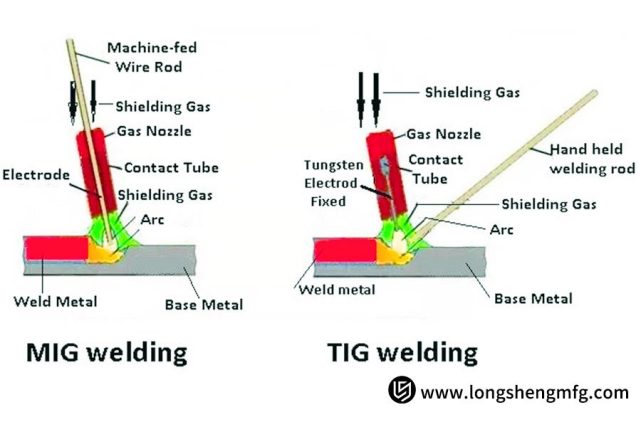
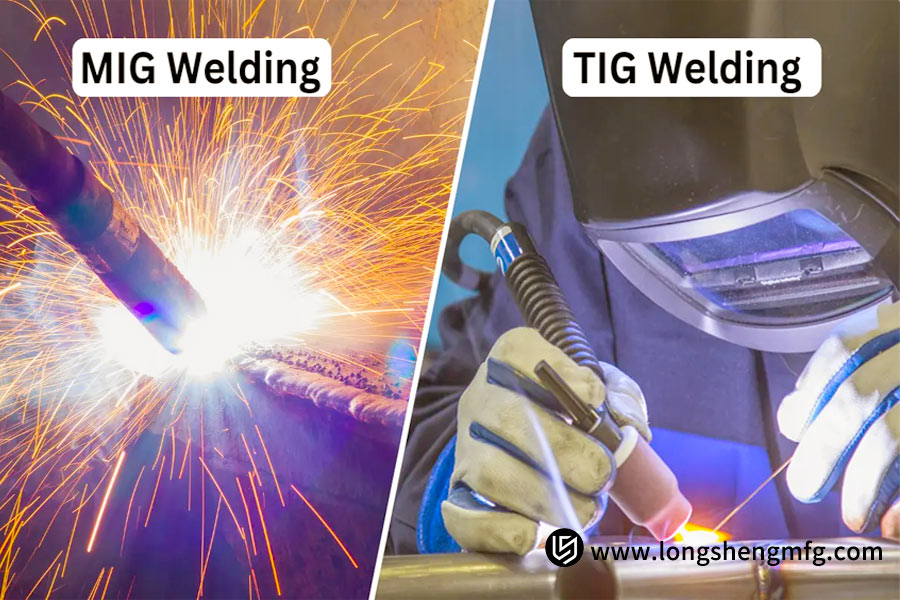
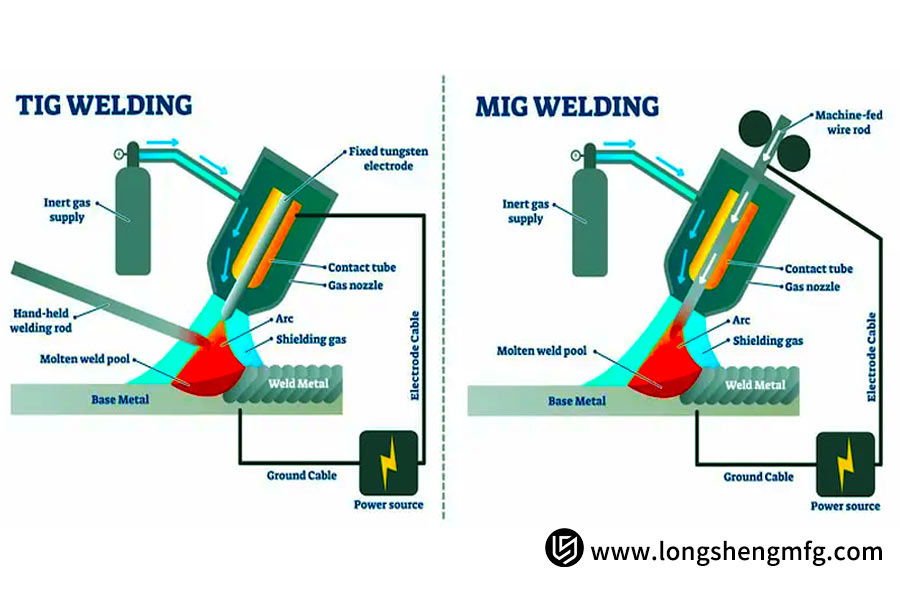
MIG welding uses a continuous wire electrode fed through a welding gun. This wire melts and joins two pieces of metal together. An inert gas, usually argon or a mix of argon and CO2, shields the weld from contamination.
The process is semi-automatic, meaning the wire feed speed and voltage are controlled by the machine, while you guide the gun along the joint. This setup allows for consistent welds with minimal spatter.
Materials Suitable For Mig Welding
MIG welding works well on a variety of metals, including steel, stainless steel, and aluminum. It’s especially effective for thin to medium-thickness metals. If you need to weld thick steel, adjustments to settings and wire type are necessary to ensure a strong weld.
Have you ever struggled with welding aluminum? MIG welding with the right gas mix and wire can make it much easier compared to other methods.
Advantages Of Mig Welding
- Speed:MIG welding is faster than many other welding types, saving time on projects.
- Ease of Use:The continuous wire feed means less stopping and starting, which helps maintain a steady weld.
- Clean Welds:The shielding gas reduces oxidation and contamination, resulting in cleaner welds.
- Versatility:You can weld a wide range of metals and thicknesses with the right setup.
Think about your current welding projects—could faster, cleaner welds improve your workflow?
Common Challenges In Mig Welding
Despite its benefits, MIG welding requires proper gas flow and wire speed settings. Too little gas can cause porosity, while too much can lead to turbulence. Incorrect wire speed may cause weak welds or excessive spatter.
Mastering these details takes practice, but once you get it right, the process becomes much smoother. Have you checked your gas flow recently?
Basics Of Tig Welding
TIG welding, or Tungsten Inert Gas welding, is a precise and versatile welding method. It uses a non-consumable tungsten electrode to create the weld, while an inert gas shields the weld area from contamination. Understanding the basics of TIG welding helps you decide if it fits your project needs.
How Tig Welding Works
In TIG welding, the tungsten electrode produces an arc that melts the metal pieces together. You manually add filler material if needed, giving you control over the weld’s strength and appearance. The inert gas, often argon, protects the weld from oxygen and nitrogen, preventing defects.
Equipment Needed For Tig Welding
- TIG Torch:Holds the tungsten electrode and directs the arc.
- Power Supply:Usually a constant current source to maintain a stable arc.
- Inert Gas Supply:Argon or helium to shield the weld.
- Filler Rod:Optional, depending on whether additional material is required.
- Protective Gear:Helmet, gloves, and fire-resistant clothing are essential.
Materials Best Suited For Tig Welding
TIG welding excels with thin materials and metals that need clean, precise welds. Stainless steel, aluminum, copper, and magnesium are common choices. If your project demands neat, high-quality welds on delicate metals, TIG might be your best bet.
Advantages Of Tig Welding
- Precision:You control the heat and filler material, allowing detailed welds.
- Clean Welds:Produces minimal spatter and requires less cleanup afterward.
- Versatility:Works well on a variety of metals and thicknesses.
Have you ever struggled to make a clean weld on thin metal? TIG welding offers a solution by giving you the control to avoid burn-through. It’s a skill worth mastering if you want your welds to look as good as they perform.
Equipment And Setup Differences
Understanding the equipment and setup differences between MIG and TIG welding is crucial for choosing the right process for your project. Each method requires specific tools and configurations that directly impact the welding experience and outcome. Let’s break down what sets their setups apart and what you need to prepare before you start welding.
Mig Welding Equipment Essentials
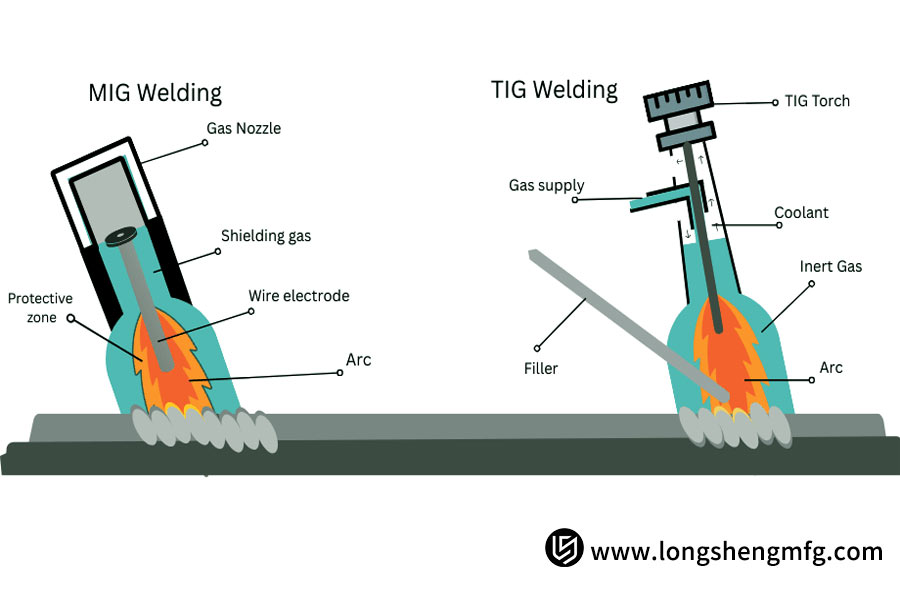
MIG welding uses a wire feed system that continuously supplies a consumable wire electrode. This wire acts as both the filler material and the electrode, simplifying the process.
- Wire feeder:Delivers the wire at a controlled speed, which you can adjust based on your weld.
- Welding gun:Houses the wire and directs the shielding gas to protect the weld from contamination.
- Shielding gas supply:Typically uses a mix of argon and CO2 to keep the weld pool clean.
- Power source:Usually a constant voltage machine that helps maintain a stable arc.
Setting up MIG welding often feels faster because you simply load the wire spool, connect the gas, and adjust the settings. Have you ever noticed how this setup encourages quick work on larger projects?
Tig Welding Equipment Essentials
TIG welding requires more precise equipment to handle its detailed and delicate process. Unlike MIG, TIG uses a non-consumable tungsten electrode and a separate filler rod that you manually add.
- TIG torch:Holds the tungsten electrode and delivers the shielding gas directly to the weld area.
- Tungsten electrode:Must be carefully ground to a point for a stable arc.
- Filler rod:Added by hand, allowing greater control over the amount of material melted into the weld.
- Shielding gas supply:Pure argon or argon mixtures are used to protect the weld from oxidation.
- Power source:Uses a constant current machine, often with an AC/DC option for different metals.
Setting up TIG welding takes more time and attention to detail. Have you tried adjusting the tungsten angle or choosing the right filler rod? These small steps greatly affect your weld quality.
Comparing Setup Complexity And Portability
MIG welding setups are generally more straightforward and portable. The integrated wire feed system means fewer manual steps during welding, making it ideal for beginners or when speed matters.
In contrast, TIG welding gear is more complex and less portable. You need to prepare the tungsten electrode carefully, use both hands, and manage multiple components simultaneously.
Which setup do you think fits your workshop style better—quick and simple or precise and controlled?
Credit: www.longshengmfg.com
Material Compatibility
Material compatibility is a key factor when choosing between MIG and TIG welding. The type of metal you want to weld affects the quality and strength of the weld. Understanding which welding method works best with different materials can save you time and improve your results.
Material Types Suitable For Mig Welding
MIG welding handles a wide range of materials with ease. It works well on:
- Steel:Both mild and stainless steel are commonly welded with MIG.
- Aluminum:MIG can weld aluminum but requires a spool gun and specific settings.
- Other metals:Materials like copper and nickel alloys can be welded, but it’s less common.
MIG is often chosen for thicker materials due to its faster welding speed. If you want to weld car frames or heavy machinery parts, MIG usually fits the job.
Material Types Suitable For Tig Welding
TIG welding offers more precision and works best on thin or delicate metals. It excels with:
- Stainless Steel:Produces clean and strong welds, perfect for food-grade and medical equipment.
- Aluminum:TIG is preferred for thin aluminum sheets because it gives better control.
- Exotic Metals:Metals like magnesium, copper, and titanium are easier to weld with TIG.
TIG welding creates welds that look almost seamless, which is why it’s favored for artistic or detailed metalwork. Have you ever struggled to weld thin metal without burning through it? TIG might be your answer.
Choosing The Right Welding Method Based On Material
Think about the metal thickness and type before deciding on MIG or TIG. If you’re working with thick steel, MIG saves time and effort. But for thin or sensitive materials, TIG gives you better control and cleaner results.
Also, consider the final look and strength requirements of your project. Are you building a structure where speed matters more? Or a delicate piece where precision is key? Your choice of welding method should match these needs.
Skill Level And Learning Curve
Understanding the skill level and learning curve between MIG and TIG welding is key to choosing the right method for your projects. Each technique demands different levels of precision and practice, impacting how quickly you become proficient.
Skill Level Required For Mig Welding
MIG welding is often considered more beginner-friendly. It uses a continuous wire feed, which helps you maintain a steady weld without much interruption.
You can pick up basic MIG welding in a shorter time, making it ideal if you want to start welding quickly. However, mastering the finer details like controlling heat and speed still requires practice.
Skill Level Required For Tig Welding
TIG welding demands a higher skill level and more hand-eye coordination. You need to control the torch, feed the filler rod, and manage heat all at once.
This multitasking makes TIG welding tougher to learn, but it allows for much more precise and cleaner welds. If you enjoy detailed work and have patience, TIG welding can be very rewarding.
Learning Curve Differences
MIG welding’s learning curve is relatively gentle. You get immediate results, which keeps motivation high as you improve.
TIG welding’s learning curve is steep and can feel frustrating at first. But the deeper skills you develop here open doors to more complex and artistic welding projects.
Choosing Based On Your Goals
Ask yourself: Do you want quick, strong welds for general projects? MIG welding might suit you best.
If your goal is precision and high-quality finishes, investing time to learn TIG welding pays off. Think about the type of work you want to create and how much time you can dedicate to practice.
Speed And Efficiency
Speed and efficiency are two critical factors that often determine the choice between MIG and TIG welding for your projects. Understanding how each method performs in these areas can save you time, reduce costs, and improve the quality of your work.
Have you ever started a welding project only to realize it takes much longer than expected? Choosing the right welding technique can help you avoid this frustration and get the job done faster without compromising quality.
Speed Of Mig Welding
MIG welding is known for its fast welding speed. It uses a continuous wire feed that allows you to weld long seams quickly without stopping. This makes it ideal for large projects or when you need to complete tasks rapidly.
Because the wire feeds automatically, you spend less time adjusting and more time welding. This efficiency can be a game-changer if you work on production lines or need to meet tight deadlines.
Speed Of Tig Welding
TIG welding is slower compared to MIG because it requires manual feeding of the filler rod. Precision is the focus here, so the process takes more time, especially for beginners.
If your project demands intricate or delicate work, TIG’s slower speed is a trade-off for higher quality and control. But if time is a priority, TIG might not be the best choice.
Efficiency In Material Use
MIG welding tends to be more efficient in terms of material usage. The continuous wire feed reduces waste, and the process generates less slag, meaning less cleanup afterward.
With TIG welding, you have more control over the heat and filler material, which can reduce distortion and rework. However, it requires more skill to maintain efficiency.
Practical Considerations For Your Workflow
- If you need to cover large areas quickly, MIG welding will save you time and effort.
- For detailed, high-quality welds, TIG welding offers precision but at a slower pace.
- Consider your skill level: MIG is generally easier and faster for beginners, while TIG demands patience and practice.
- Think about your project’s priorities: speed or precision. Which matters more to you right now?
Applications And Use Cases
Understanding the applications of MIG and TIG welding helps select the right process for each job. Both methods have unique strengths suited to different tasks and materials. This section explores where each welding technique excels and why professionals choose them.
Mig Welding Applications
MIG welding is popular in industries needing fast, strong welds. It suits thicker metals and works well for long projects. Common uses include:
- Automotive repairs and manufacturing
- Construction steel frameworks
- Shipbuilding and heavy machinery
- Metal fabrication shops
- Home DIY projects involving steel
This method handles various metals like steel, aluminum, and stainless steel. Its speed makes it ideal for high-production environments.
Tig Welding Applications
TIG welding offers high precision and cleaner welds. It is preferred for delicate or thin materials. Typical uses include:
- Aerospace components requiring accuracy
- Bicycle and motorcycle frame building
- Artistic metalwork and sculpture
- Food and beverage industry equipment
- Repairing thin stainless steel or aluminum parts
Its control allows welding of exotic metals like titanium. TIG welding produces smooth, strong joints with minimal spatter.
Choosing Between Mig And Tig For Projects
| Factor | MIG Welding | TIG Welding |
|---|---|---|
| Speed | Fast, suitable for long welds | Slower, precise and controlled |
| Material Thickness | Thicker metals | Thin or delicate metals |
| Weld Appearance | Less clean, more spatter | Clean, smooth finish |
| Skill Level | Easy to learn | Requires more practice |
| Common Industries | Construction, automotive | Aerospace, art, food industry |
Choosing the right welding type depends on project needs, metal type, and desired finish. Both MIG and TIG have distinct roles across industries.
Credit: www.longshengmfg.com
Cost Considerations
Cost is a key factor when deciding between MIG and TIG welding for your projects. It influences not only your initial investment but also ongoing expenses, affecting your overall budget and efficiency.
Mig Welding Equipment And Setup Costs
MIG welding machines tend to be more affordable upfront. The equipment is simpler and widely available, which keeps prices lower.
Consumables like wire and shielding gas are also relatively cheap. This makes MIG a budget-friendly choice for beginners and routine welding tasks.
Tig Welding Equipment And Setup Costs
TIG welding gear usually comes with a higher price tag. The machines are more complex and require additional components like a foot pedal.
The tungsten electrodes and inert gases needed for TIG add to the expense. If you need precision and high-quality welds, this cost can be worth it, but it demands a bigger budget.
Operating Costs And Efficiency
MIG welding is faster, so it uses less labor time. This can save money on large or repetitive jobs.
TIG welding takes longer and requires more skill, which can increase labor costs. However, it produces cleaner welds with fewer defects, potentially reducing rework expenses.
Which Welding Cost Fits Your Needs?
- Do you prioritize speed and lower initial costs? MIG might suit you better.
- Is precision and weld quality more important, even if it means spending more? TIG could be the right choice.
- Consider how much you’ll weld and what kind of projects you’ll tackle before deciding.
Safety And Precautions
Safety is crucial in both MIG and TIG welding. Both methods involve high temperatures, bright light, and hazardous fumes. Proper precautions reduce the risk of injury and health problems. Knowing the differences in safety needs helps welders stay protected.
Mig Welding Safety Precautions
- Wear a welding helmet with a shaded lens to protect your eyes.
- Use flame-resistant gloves and clothing to avoid burns.
- Ensure good ventilation to prevent inhaling harmful fumes.
- Keep a fire extinguisher nearby for emergencies.
- Avoid touching the welding wire or metal parts during operation.
- Inspect equipment regularly to avoid electrical shocks.
Tig Welding Safety Precautions
- Wear a helmet with proper shading for intense arc light.
- Use insulated gloves for better control and protection.
- Maintain good ventilation to reduce exposure to gases.
- Wear protective clothing that covers all skin areas.
- Handle tungsten electrodes carefully to prevent injury.
- Check for gas leaks in the TIG torch before welding.
Common Safety Tips For Both Mig And Tig Welding
- Always work in a clean, dry area to avoid slips and shocks.
- Keep your workspace free from flammable materials.
- Use ear protection if working in noisy environments.
- Never weld in wet or damp conditions.
- Follow manufacturer instructions for all welding equipment.
Future Trends In Welding Technology
Welding technology is evolving rapidly, shaping the future of industries from automotive to aerospace. Understanding these trends can help you stay ahead whether you’re a hobbyist or a professional welder. The future holds exciting possibilities for both MIG and TIG welding techniques.
Advancements In Automation And Robotics
Automation is making welding faster and more precise. Robots equipped with advanced sensors can now perform complex welds with minimal human intervention. This reduces errors and improves safety, especially in hazardous environments.
If you’ve ever struggled with maintaining a steady hand for TIG welding, imagine a robot handling that challenge flawlessly. Do you think automation could replace your role, or will it enhance your skills?
Integration Of Artificial Intelligence
Artificial Intelligence (AI) is starting to assist welders by analyzing weld quality in real-time. AI systems can detect defects instantly and suggest adjustments, saving time and materials.
This technology is especially useful in MIG welding, where faster production speeds can sometimes compromise quality. Would you trust an AI system to guide your welding process, or prefer manual control?
Improved Welding Materials And Techniques
New alloys and filler materials are being developed to improve weld strength and corrosion resistance. These materials work well with both MIG and TIG methods, expanding their applications.
Techniques like pulse welding are becoming more popular, allowing better control over heat input. This means less warping and cleaner welds, making your work look more professional.
Portable And User-friendly Equipment
Welding machines are becoming lighter and more compact without sacrificing power. This makes it easier to weld in tight spaces or on-site locations.
For TIG welders, new torches with ergonomic designs reduce fatigue during long projects. How much difference would easier-to-handle gear make in your daily work?
Environmental And Energy Efficiency Focus
Welding processes are being optimized to use less energy and produce fewer emissions. Both MIG and TIG welding are benefiting from greener power sources and better ventilation systems.
As environmental regulations tighten, knowing how to minimize your welding footprint could become crucial for your career. Are you prepared to adapt to these eco-friendly changes?
Frequently Asked Questions
What Is The Main Difference Between Mig And Tig Welding?
MIG welding uses a continuous wire electrode and gas, ideal for faster jobs. TIG welding uses a non-consumable tungsten electrode for precise, high-quality welds.
Which Welding Method Is Easier For Beginners?
MIG welding is easier for beginners due to its simplicity and faster learning curve. TIG requires more skill and control.
What Materials Are Best Suited For Mig Vs Tig Welding?
MIG works well on thicker metals like steel and aluminum. TIG is preferred for thin metals and stainless steel for cleaner welds.
How Do Mig And Tig Welding Differ In Cost?
MIG welding equipment is generally less expensive and requires less maintenance. TIG welding gear is costlier but offers greater precision.
Conclusion
Mig and Tig welding each serve different needs and skills. Mig welding works fast and suits thicker metals. Tig welding offers more control and cleaner results. Choosing depends on your project and comfort level. Both methods have clear benefits. Knowing the differences helps you pick the right one.
Practice improves your technique with either process. Keep learning to weld with confidence and ease.
About The Author

