
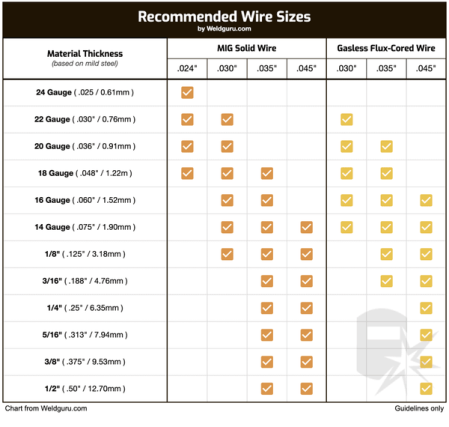
Choosing the right welding wire size can make or break your project. You might think it’s a small detail, but using the wrong size can lead to weak welds, wasted materials, and frustration.
Whether you’re a beginner or have some experience, understanding which wire size fits your needs will save you time and improve your results. You’ll discover simple tips to pick the perfect welding wire size every time. Keep reading, and you’ll never second-guess your choice again.
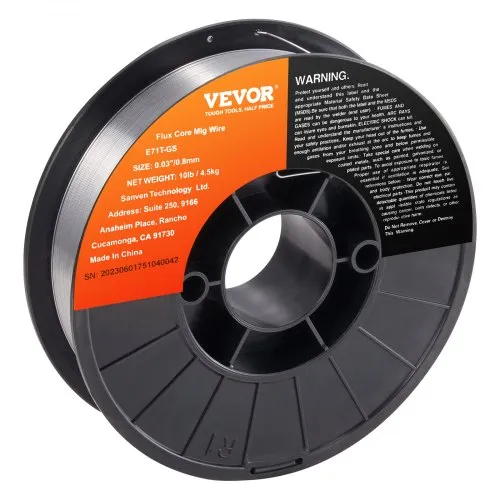
Credit: www.vevor.ca
Choosing Welding Wire Sizes
Choosing the right welding wire size is key to getting strong, clean welds. The diameter of the wire affects not only the weld quality but also how easy it is to work with your equipment. Picking the wrong size can lead to weak joints or wasted material, so understanding the options helps you make smarter decisions for your projects.
Common Wire Diameters
Welding wires come in a range of sizes, typically measured in inches or millimeters. The most common diameters you’ll see are:
- 0.023 inch (0.6 mm)– Great for thin metals and detailed work.
- 0.030 inch (0.8 mm)– A versatile choice for general welding tasks.
- 0.035 inch (0.9 mm)– Suitable for thicker materials and heavier welds.
- 0.045 inch (1.2 mm)– Used for very thick metals and high deposition rates.
If you’ve ever struggled with wire jams or inconsistent welds, it might be due to using an unsuitable diameter for your job or machine.
Wire Size And Weld Strength
The diameter of your welding wire directly impacts the strength of your weld. Thicker wire deposits more filler metal quickly, which can create a stronger joint on heavy-duty parts.
However, too large a wire on thin metal can cause burn-through or warping. It’s about finding the right balance between wire size and material thickness to achieve a durable weld without damaging your workpiece.
Ask yourself: Is your project structural or cosmetic? This will guide your choice between a finer or thicker wire diameter.
Matching Wire To Welding Process
Different welding processes require specific wire sizes to work efficiently. For example, MIG welding commonly uses wire diameters between 0.023 and 0.045 inch depending on the material thickness and position.
Flux-cored arc welding (FCAW) generally needs thicker wires to maintain consistent feed and penetration. TIG welding, on the other hand, often uses filler rods rather than wire, but when wire is used, it tends to be finer for precision.
Check your welder’s specifications and the welding technique you plan to use. Using the recommended wire size will save you time and reduce weld defects.
Factors Influencing Wire Size
Choosing the right welding wire size isn’t just about picking a number off a chart. Several key factors affect your choice, and understanding them helps you weld stronger and cleaner. Let’s break down these factors so you can make the best decision for your project.
Material Thickness
The thickness of the material you’re welding plays a huge role in determining the wire size. Thicker materials need thicker wire to deliver enough heat and filler metal for a strong bond.
For thin sheets, using a large wire can cause burn-through or warping. Thinner wire offers better control and precision in these cases.
Think about a project where you welded both thin and thick steel. Did you notice how the wire size affected the weld bead? Adjusting wire size helped you avoid weak spots and saved time.
Type Of Metal
Different metals require different wire sizes because they have unique melting points and conductivity. For example, aluminum often needs a larger wire size than steel to feed enough filler metal and maintain weld stability.
Some metals, like stainless steel, may call for a specific wire type and size to resist corrosion and maintain strength. Using the wrong wire size can lead to poor weld quality or even weld failure.
Ask yourself: what metal am I working with, and what wire size will give the best penetration without wasting material?
Welding Position
Your welding position—flat, vertical, overhead—affects how the wire feeds and melts. In overhead or vertical positions, a smaller wire size often gives you better control and reduces the risk of excessive spatter or sagging.
Flat welding positions can handle larger wire sizes because gravity helps control the molten pool. But don’t assume a bigger wire always works better; sometimes smaller wire gives cleaner results even in flat positions.
Have you tried switching wire sizes based on your welding angle? Noticing the difference in bead appearance and weld strength can guide you toward the best choice.
Wire Size For Different Metals
Choosing the right wire size for welding different metals can make a huge difference in your project’s strength and finish. The wire size affects how smoothly the wire feeds, the amount of heat generated, and the weld’s overall appearance. Knowing which size fits each metal type helps you avoid common welding problems like poor penetration or excess spatter.
Steel Welding Wire Sizes
Steel is the most common metal welded, and it requires specific wire sizes depending on the thickness and type of steel. For thin steel sheets, a smaller diameter like 0.023″ or 0.030″ works well because it reduces heat and prevents burn-through.
Thicker steel parts demand larger wires, such as 0.035″ or 0.045″, to provide enough filler material and maintain a strong weld. If you’ve ever struggled with wire jams or inconsistent beads, adjusting the wire size often fixes those issues.
Aluminum Wire Options
Aluminum welding uses softer wires, so size choices impact feedability and weld quality more noticeably. The most common aluminum wire sizes are 0.030″ and 0.035″.
Smaller wires help with precise, thin aluminum sheets, while the 0.035″ size suits thicker or structural aluminum components. Have you noticed how aluminum sometimes clogs your feed mechanism? Trying a slightly smaller wire often smooths the feeding process.
Stainless Steel Wire Choices
Stainless steel requires wires that match both the alloy and your weld’s purpose. The typical wire sizes here range from 0.030″ to 0.045″.
Use smaller wires for thin stainless steel to avoid warping and larger wires for heavier gauge work. If you want clean welds with less spatter, matching the wire size to your stainless grade is key—don’t just pick the size that’s easiest to find.
Wire Size And Welding Techniques
Choosing the right wire size directly impacts your welding quality and ease. Different welding techniques demand specific wire sizes to ensure strong welds and smooth operation. Understanding how wire size interacts with your welding method helps you avoid common issues like poor penetration or excessive spatter.
Mig Welding Wire Size Tips
MIG welding typically uses wire sizes between 0.023 inches and 0.035 inches. Thinner wires like 0.023 inches work well for thin sheet metal, giving you better control and reducing burn-through risk.
For thicker materials, go with 0.030 or 0.035 inches to ensure deep penetration and a stronger weld. If you’ve ever struggled with weak welds, experimenting with wire size could solve it.
Keep in mind, your machine’s wire feeder might limit your choices, so check compatibility first.
Tig Welding Wire Considerations
TIG welding uses filler rods instead of continuous wire, but selecting the right diameter is just as important. Common TIG filler rod sizes range from 1/16 inch to 3/32 inch.
Smaller diameters provide better precision on thin metals, while thicker rods speed up welds on heavy materials. Think about your project’s thickness and detail level before picking a rod size.
Also, remember TIG welding requires steady hands; thinner rods demand more skill but yield finer results.
Flux-cored Wire Sizes
Flux-cored welding wires come in sizes from 0.030 inches to 0.045 inches. Smaller wires are great for thin metals and indoor work, offering less spatter and cleaner welds.
Larger wires handle thicker metals and outdoor conditions better, providing deeper penetration and faster weld speeds. If you’ve faced challenges with inconsistent welds, adjusting your wire size might be the fix.
Check your welding machine settings to match your wire size, ensuring smooth feeding and consistent arc stability.
Adjusting Wire Feed Speed
Adjusting the wire feed speed is a crucial part of getting your weld just right. It controls how much welding wire is fed into the joint, which affects the stability and strength of the weld. If the speed is off, you might face problems like weak welds or excessive spatter.
Impact On Weld Quality
Wire feed speed directly influences the heat input and bead shape. Too fast a feed can cause the weld pool to become unstable, leading to excessive spatter and a rough finish. On the other hand, feeding wire too slowly can result in insufficient penetration and a weak bond.
Think about a time you tried welding with a feed rate that was too high—you probably noticed the splatter and uneven beads immediately. Adjusting the speed to match your wire size and material can drastically improve the weld’s appearance and strength.
Optimizing For Different Wire Sizes
Different wire diameters require different feed speeds to maintain a stable arc. Thicker wires need slower feed speeds because they deliver more filler metal per inch. Conversely, thinner wires require faster speeds to keep the weld pool properly supplied.
| Wire Diameter | Recommended Feed Speed Range (inches per minute) | Common Use |
|---|---|---|
| 0.023″ | 200-350 | Thin sheet metal, light fabrication |
| 0.030″ | 300-450 | General purpose welding |
| 0.035″ | 350-550 | Heavier materials, structural work |
Have you ever tried using the same feed speed for different wire sizes? It often leads to poor welds. Take the time to adjust the feed speed for each wire size to ensure you get consistent and strong welds every time.

Credit: www.youtube.com
Troubleshooting Wire Size Issues
Choosing the right welding wire size can feel like a guessing game, especially when your welds don’t turn out as expected. Troubleshooting wire size issues is crucial because the wrong diameter can lead to weak joints, excessive spatter, or even equipment damage. Let’s break down how to spot and fix these problems so your next weld is strong and clean.
Common Wire Size Mistakes
Using wire that’s too thick or too thin for your project is a frequent error. Thicker wire might seem durable but can cause poor arc stability and burn-through on thin metals. On the other hand, thinner wire may not supply enough filler metal, leading to weak welds.
Another mistake is mixing wire sizes without adjusting machine settings. Your welder needs proper feed speed and voltage for each wire diameter. Ignoring this can result in inconsistent weld beads and increased spatter.
Signs Of Incorrect Wire Diameter
How do you know if your wire size is off? Watch for these signs:
- Excessive spatter around the weld area
- Porous or brittle welds that crack easily
- Difficulty maintaining a steady arc
- Uneven or irregular bead shape
If you notice that your wire is feeding too slowly or too fast despite adjustments, it’s a red flag. Also, if your weld puddle feels hard to control, the wire diameter might not match the metal thickness.
Correcting Wire-related Weld Defects
Start by matching your wire size to the base metal thickness. For thinner metals, use smaller wire diameters (around 0.023” to 0.030”). Thicker metals often need larger diameters (0.035” or more).
Adjust your machine settings whenever you switch wire sizes. Increase feed speed with thicker wire and lower it with thinner wire to maintain a stable arc. Don’t hesitate to run test welds on scrap metal to dial in the perfect setup.
Lastly, clean your wire and check for rust or contamination before welding. Dirty wire worsens weld quality regardless of size. Have you ever fixed a tricky weld just by swapping wire sizes? It’s a simple change that can save hours of frustration.
Expert Tips For Perfect Welds
Perfect welds don’t just happen—they require careful choices and attention to detail. One of the most crucial decisions is selecting the right welding wire size. Getting this right influences your weld’s strength, appearance, and overall quality.
Selecting Wire For Specific Projects
Think about the material thickness and type before picking your wire size. Thinner metals usually need smaller wire diameters to avoid burn-through and maintain control.
Heavier gauge materials demand thicker wire to provide enough filler and heat. If you’re welding stainless steel, remember it often requires a different wire alloy than carbon steel. Matching your wire to the project helps you avoid weak welds and costly mistakes.
Balancing Wire Size And Voltage
Your wire size must work well with your welding machine’s voltage settings. Larger wire diameters require higher voltage to melt properly and maintain a smooth arc.
Too low voltage on thick wire causes poor fusion and spatter. Too high voltage on thin wire can burn holes or cause excessive spatter. Adjusting both wire size and voltage together keeps your arc stable and your weld clean.
Maintaining Consistent Wire Feed
Consistent wire feed speed is key to a smooth, strong weld. Irregular feed rates cause uneven bead shape and weak spots.
Make sure your wire spool is properly mounted and your feeder rollers are clean and correctly tensioned. Have you checked your feed speed settings today? Small tweaks here can dramatically improve your weld quality.
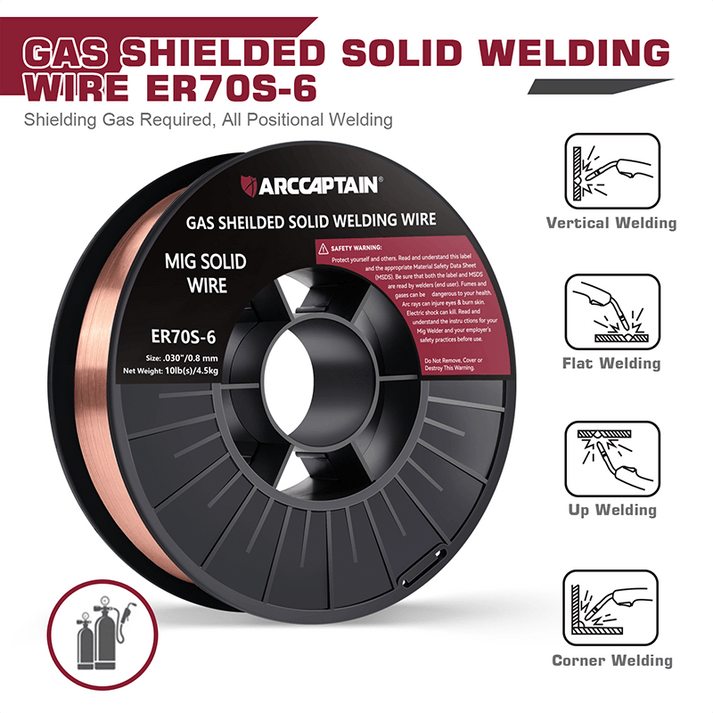
Credit: www.arccaptain.com
Frequently Asked Questions
What Size Welding Wire For Mig Welding?
The size of welding wire for MIG welding depends on the material thickness. For thin materials, use 0. 023-inch wire. Medium thickness requires 0. 030-inch wire, while thicker materials may need 0. 035-inch or larger. Choose the right wire size for optimal results and efficient welds.
How To Choose Welding Wire Size For Projects?
Choose welding wire size based on material thickness and welding position. Thinner wires are better for thin materials and detailed work. Thicker wires provide stronger welds for heavier materials. Consider your welding machine’s capacity and the type of metal being welded to select the correct wire size.
Can Wire Size Affect Welding Quality?
Yes, wire size significantly affects welding quality. Using the correct wire size ensures proper penetration and strong welds. Too large a wire can lead to excessive spatter, while too small a wire may not provide adequate strength. Always match the wire size to the material thickness.
What Wire Size For Automotive Welding?
For automotive welding, 0. 023-inch to 0. 030-inch wire is commonly used. These sizes are suitable for the thin sheet metal found in vehicles. They provide good control and penetration without overheating or warping the metal. Ensure your welding machine is compatible with these wire sizes.
Conclusion
Choosing the right welding wire size affects your weld strength and quality. Smaller wire suits thin metals and detailed work. Larger wire fits thicker metals and heavy jobs. Match wire size with your welding machine and project needs. Testing a few sizes helps find the best fit.
Keep safety and efficiency in mind during welding. Correct wire size makes your work easier and lasts longer. Keep learning and practicing for better results every time.
About The Author

