

Are you trying to decide between Tig and Mig welding but feel overwhelmed by the technical details? You’re not alone.
Understanding the difference between these two popular welding methods can save you time, money, and frustration. Whether you’re a beginner or looking to improve your skills, knowing which technique suits your project is key. You’ll discover clear, simple explanations that make choosing the right welding method easier than ever.
Keep reading to unlock the secrets behind Tig and Mig welding and find out which one fits your needs perfectly.
Basics Of Tig Welding
TIG welding, also called Gas Tungsten Arc Welding (GTAW), is a precise welding process. It uses a non-consumable tungsten electrode to produce the weld. This method offers great control over the heat and weld puddle. It creates clean and high-quality welds on thin materials.
Understanding the basics of TIG welding helps to see its unique features. It differs from other welding types in how it handles the filler material and heat source.
What Is Tig Welding?
TIG welding uses a tungsten electrode to create an electric arc. The arc melts the base metals to join them. A shielding gas, usually argon, protects the weld area from contamination. The welder can add filler metal by hand if needed. This method produces smooth, strong welds with minimal spatter.
Key Components Of Tig Welding
- Tungsten Electrode:Non-consumable, creates the arc.
- Power Supply:Provides electric current for the arc.
- Shielding Gas:Usually argon, protects the weld from air.
- Filler Rod:Optional, added manually to the weld pool.
- Torch:Holds the tungsten and directs the arc.
Common Uses And Applications
TIG welding suits projects needing precision and clean welds. It works well on stainless steel, aluminum, and thin metals. Common in aerospace, automotive, and art industries. Used for pipes, tanks, and structural components. Preferred for repairs and detailed work requiring strong, neat welds.
Basics Of Mig Welding
MIG welding is one of the most common welding methods used worldwide. It stands for Metal Inert Gas welding. This method uses a continuous wire electrode and a shielding gas to join metals. It is popular for its speed and ease of use, making it ideal for beginners and professionals alike.
The process produces clean welds with minimal spatter. It works well on thin to medium thickness metals. This method is widely used in many industries due to its efficiency and reliability.
What Is Mig Welding?
MIG welding is a type of arc welding. It uses an electric arc to melt metals and join them. The welding wire acts as both the electrode and filler material. A shielding gas protects the weld from contamination by air.
This method allows continuous feeding of the wire. It results in faster welding compared to other methods. MIG welding works best on steel, aluminum, and stainless steel.
Key Components Of Mig Welding
- Welding Gun:Delivers the wire electrode and shielding gas.
- Wire Electrode:Acts as the filler material to join metals.
- Power Supply:Provides the electric current for the arc.
- Shielding Gas:Protects the weld from oxygen and nitrogen in the air.
- Ground Clamp:Completes the electrical circuit for welding.
Common Uses And Applications
MIG welding is widely used in automotive repair and manufacturing. It is common in construction for building steel structures. Many metal fabrication shops use MIG welding for its speed.
It is also suitable for making household items and art projects. This method is preferred for projects requiring clean, strong welds quickly.
Technical Differences
Understanding the technical differences between TIG and MIG welding can help you decide which technique fits your project and skill level. Each method uses unique tools and processes that impact the quality and type of weld you produce. Let’s break down these differences clearly so you can make an informed choice.
Electrode Type And Function
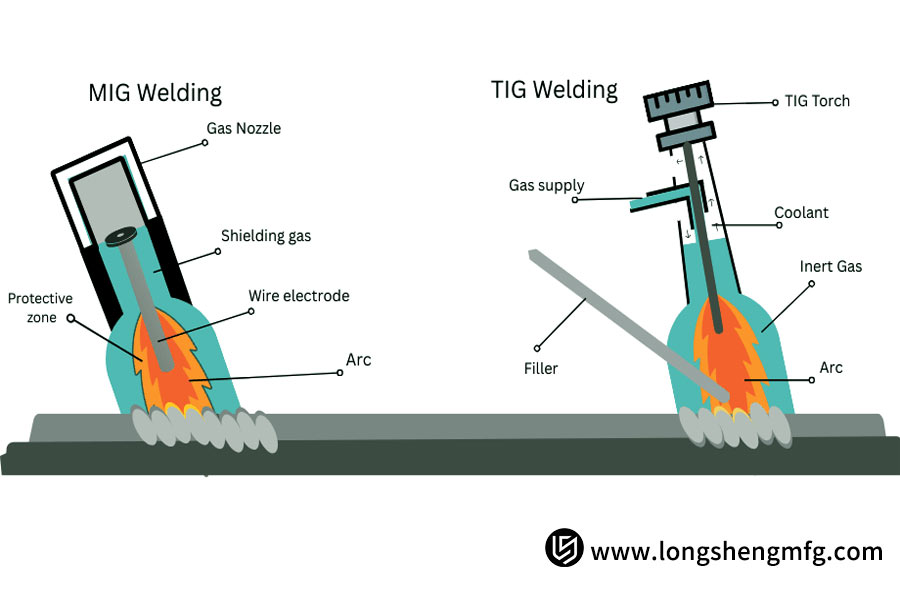
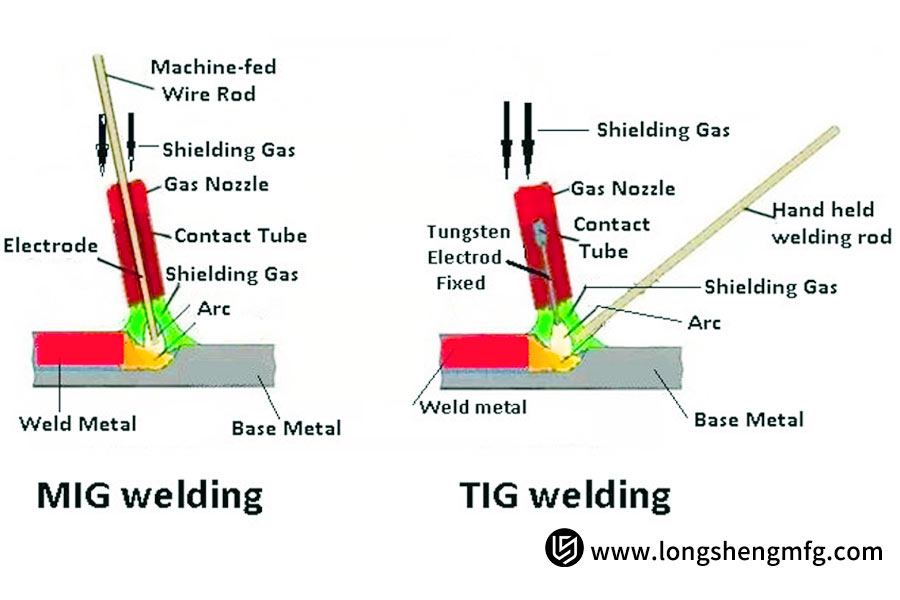
TIG welding uses a non-consumable tungsten electrode to create the arc. The tungsten does not melt, allowing for a precise and stable arc, which is ideal for detailed work.
MIG welding, on the other hand, uses a consumable wire electrode that feeds continuously through the welding gun. This wire melts and becomes part of the weld, making the process faster and more suited for thicker materials.
Have you noticed how the choice of electrode affects your control over the weld bead? TIG gives you fine control, while MIG speeds up the job.
Shielding Gas Requirements
TIG welding typically requires pure inert gases like argon or helium to shield the weld area from contamination. These gases protect the tungsten electrode and the molten metal from oxidizing, ensuring a clean and strong weld.
MIG welding uses a mix of gases, often argon combined with carbon dioxide or oxygen, depending on the material being welded. This gas mix helps stabilize the arc and improve penetration, but can also produce more spatter than TIG.
Choosing the right gas can be tricky—have you experimented with different mixes to improve your weld quality?
Welding Technique And Skill Level
TIG welding demands a steady hand and high skill since you control the torch, filler rod, and foot pedal or current settings all at once. This makes TIG ideal for thin metals and intricate joints where precision matters.
MIG welding is generally easier to learn because it’s more automated. The continuous wire feed reduces the need for hand coordination, making it a popular choice for beginners and high-volume work.
Think about your project needs—do you want speed or precision? Your skill level and patience will guide your choice here.
Material Compatibility
Understanding material compatibility is crucial when choosing between TIG and MIG welding. Each welding method interacts differently with various metals, affecting the strength and quality of your weld. Knowing which metals work best with TIG or MIG will help you achieve cleaner, stronger joints and avoid costly mistakes.
Metals Suited For Tig Welding
TIG welding excels with metals that require precision and clean finishes. It works well on thin materials where heat control is vital to prevent warping or burn-through.
- Stainless Steel:TIG produces high-quality, rust-resistant welds ideal for medical and food industry applications.
- Aluminum:TIG handles aluminum smoothly, especially thin sheets, giving you a neat, strong weld.
- Copper and Brass:TIG’s precise heat application is perfect for these metals, avoiding distortion.
- Magnesium:TIG allows careful control needed for this reactive metal.
If you want to weld exotic or thin metals with a clean finish, TIG is often the better choice. Have you noticed how TIG can create almost artistic weld beads on delicate metals? That’s the level of control you get.
Metals Suited For Mig Welding
MIG welding is a faster, more forgiving process that works great on thicker and more common metals. It’s often used in heavy fabrication and construction due to its speed and ease.
- Carbon Steel:MIG is ideal for this widely used metal, providing strong and quick welds.
- Stainless Steel:It can weld stainless steel effectively, though with less precision than TIG.
- Aluminum:MIG can weld aluminum but requires special equipment and skills to manage the material’s heat sensitivity.
MIG welding’s ability to cover large areas quickly makes it your go-to for projects where speed matters more than fine detail. Do you need to weld thick steel frames or automotive parts fast? MIG might be your best bet.
Speed And Efficiency
Speed and efficiency are vital factors in choosing between TIG and MIG welding. These elements influence the overall productivity and project timelines. Both methods have strengths, but their performance varies depending on the task.
Comparative Welding Speed
MIG welding is faster than TIG welding in most cases. It uses a continuous wire feed, which allows for quick and steady welds. TIG welding requires more precision and slower movements. This precision means TIG welds take more time to complete.
MIG welding suits larger and thicker materials that need fast joining. TIG welding works well for thin materials and detailed work, even if it takes longer.
Efficiency In Production Settings
MIG welding is more efficient in high-volume production. Its speed reduces labor costs and increases output. The ease of use also means less training time for workers.
TIG welding, though slower, creates stronger and cleaner welds. It fits well in industries where quality is more important than speed. For mass production, MIG welding often offers better overall efficiency.
Credit: www.longshengmfg.com
Cost Considerations
Understanding the cost differences between TIG and MIG welding can help you decide which method fits your budget and project needs. Costs vary widely depending on the equipment you buy and how much you use it. Let’s break down where your money goes in both cases.
Equipment And Setup Costs
TIG welding machines usually have a higher upfront price. You need a power source, a torch, a foot pedal, and high-quality tungsten electrodes. The additional setup for gas regulators and hoses can add to the initial investment.
MIG welding equipment tends to be more affordable and easier to set up. You mainly need a welding machine, a wire feeder, and a gas supply. This simplicity often makes MIG a better choice if you want to start welding quickly without spending a lot.
Think about this: if you’re working on detailed or delicate projects, TIG’s precision might justify the higher setup cost. But if your goal is to weld faster and on thicker materials, the lower cost and faster setup of MIG could save you money in the long run.
Operational Costs
Operational costs include consumables like welding wire, gas, and electricity, plus maintenance. TIG welding uses inert gases like argon, which can be expensive, especially if you’re welding for long periods.
MIG welding also requires shielding gas, usually a mix of argon and CO2, which is generally cheaper than pure argon. Plus, MIG wire is typically less costly than TIG tungsten electrodes, especially when you factor in how much wire you use for larger projects.
Electricity use is another factor. TIG welding can use more power because it often runs at higher amperage for detailed work. MIG welding, on the other hand, can be more energy-efficient for faster, continuous welds.
Have you considered how often you’ll weld and the scale of your projects? This can make a big difference in deciding which operational costs will affect your budget the most.
Quality And Precision
Quality and precision define the success of any welding project. Both TIG and MIG welding offer strong joints, but their approach to quality differs greatly. Understanding these differences helps you choose the right method for detailed or heavy-duty work.
Weld Appearance And Finish
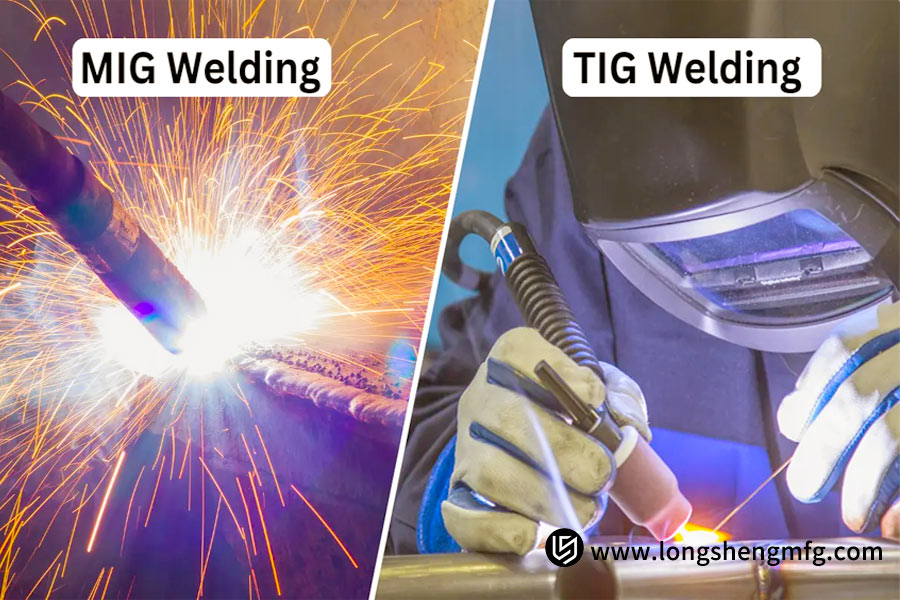
TIG welding creates clean and smooth welds. The process uses a non-consumable tungsten electrode, producing minimal spatter. This results in a neat and polished finish. TIG welds often require little to no cleaning after welding.
MIG welding produces welds faster but with more spatter. The use of a consumable wire electrode can create a rougher finish. Welds may need additional grinding or cleaning to improve appearance. MIG is ideal for quick jobs where finish is less critical.
Precision In Weld Control
TIG welding allows precise control over heat and filler material. This control suits thin metals and delicate projects. Welders can adjust the torch angle and filler rod feed smoothly. TIG is perfect for projects needing accuracy and fine details.
MIG welding offers less precision but higher speed. The wire feed runs automatically, limiting manual control. This makes MIG better for larger, thicker materials. It is less suited for tasks requiring detailed welds or thin metals.
Credit: www.longshengmfg.com
Safety Measures
Safety measures in TIG and MIG welding are crucial because both processes involve intense heat, bright light, and potentially harmful fumes. Understanding these safety steps helps protect you from injuries and long-term health problems. Knowing the differences in safety requirements between TIG and MIG welding can make your work environment safer and more efficient.
Protective Gear
Wearing the right protective gear is non-negotiable in welding. For both TIG and MIG, you need a welding helmet with a proper shade to shield your eyes from harmful UV and infrared rays. Gloves made of heat-resistant material protect your hands from burns and sparks.
Since TIG welding produces less smoke but hotter sparks, your gloves should be thinner to allow better dexterity, while MIG welding gloves can be thicker to handle more intense sparks. Don’t forget flame-resistant clothing to cover your skin and avoid synthetic fibers that can melt onto you.
Common Safety Hazards
Each welding method has its own set of hazards you should watch for. TIG welding, for instance, involves higher voltage, which increases the risk of electrical shock. You must ensure your equipment is well-maintained and that you are working in a dry environment.
MIG welding produces more fumes and spatter, so ventilation is key. Inadequate airflow can lead to inhaling toxic gases, which might cause headaches or long-term lung issues. Have you checked if your workspace has proper exhaust fans or air filtration?
Both methods expose you to fire risks. Sparks can ignite nearby flammable materials, so always keep your workspace clean and free of clutter. Safety isn’t just about gear; it’s about being aware of your surroundings and taking proactive steps to avoid accidents.
Industry Preferences
Understanding industry preferences between TIG and MIG welding can help you choose the right technique for your projects. Different sectors lean toward one method over the other based on factors like precision, speed, and material type. Let’s look at where each welding style fits best and why.
Automotive Industry
The automotive world favors MIG welding for its speed and efficiency. Assembly lines demand quick, strong welds to keep up with production schedules. MIG welding handles thin metals well, making it ideal for car body frames and panels.
However, TIG welding finds its place in areas needing high precision, such as exhaust systems and custom parts. It offers cleaner welds with less spatter, which is crucial when aesthetics and durability matter. If you’ve worked on a custom car build, you might have experienced how TIG welding helps achieve flawless joints.
Aerospace And Aviation
TIG welding dominates aerospace due to its ability to create extremely precise and high-quality welds. Aircraft components demand strong, defect-free connections to ensure safety and performance. TIG’s control over heat input prevents warping and maintains material integrity, crucial when working with lightweight alloys.
Though slower, TIG welding’s accuracy outweighs speed in this field. Imagine the stakes involved in aircraft manufacturing — would you trust a faster but less precise method here? The answer often leads specialists to TIG welding for critical parts.
Construction And Infrastructure
Construction projects often rely on MIG welding for its speed and ease of use on large-scale structures. When building bridges or steel frameworks, the ability to weld quickly and handle thicker metals is a priority. MIG welding equipment is also more portable, which suits on-site work.
That said, TIG welding is used for specialized tasks where weld quality can’t be compromised, like pipelines or architectural features. If you’ve observed construction sites, you’ll notice MIG welders working rapidly, but TIG specialists stepping in for detailed sections.
Credit: www.longshengmfg.com
Frequently Asked Questions
What Are The Main Differences Between Tig And Mig Welding?
Tig welding uses a non-consumable tungsten electrode and requires filler rods. Mig welding uses a consumable wire electrode. Tig offers precise control and cleaner welds, while Mig is faster and easier for thicker metals.
Which Welding Method Is Better For Beginners, Tig Or Mig?
Mig welding is better for beginners due to its simplicity and speed. Tig welding requires more skill and control, making it ideal for experienced welders.
Can Tig And Mig Welding Be Used On The Same Metals?
Yes, both Tig and Mig welding work on steel, stainless steel, and aluminum. Tig is preferred for thin metals, while Mig suits thicker materials.
How Do Tig And Mig Welding Differ In Welding Speed?
Mig welding is generally faster because it feeds wire continuously. Tig welding is slower but provides more precise, high-quality welds.
Conclusion
TIG and MIG welding each have clear uses and strengths. TIG offers precise control and cleaner welds. MIG works faster and suits thicker metals well. Choosing the right method depends on your project needs. Understanding these differences helps you weld better.
Both types have unique roles in metalwork. Knowing when to use TIG or MIG saves time and effort. Welding becomes easier with the right technique. Keep practicing to improve your skills steadily.
About The Author

