
Are you curious about what gas you need for MIG welding? Choosing the right gas can make a huge difference in how smooth and strong your welds turn out.
Whether you’re a beginner or looking to improve your skills, understanding the gas used in MIG welding is key to getting the best results. Keep reading, and you’ll discover exactly which gases work best, why they matter, and how to pick the right one for your project.
This knowledge will help you weld like a pro and avoid common mistakes that could cost you time and money.
Credit: www.ssimder.com
Basics Of Mig Welding
Understanding the basics of MIG welding is essential if you want to get the best results from your projects. It’s a popular welding method because it’s fast, efficient, and produces clean welds. But knowing what happens behind the scenes can help you work smarter and avoid common mistakes.
Understanding Mig Welding
MIG stands for Metal Inert Gas welding. It uses a continuous wire electrode that melts and joins metals together. The process relies on an inert or semi-inert gas to protect the weld from contamination.
One thing I’ve noticed is that many beginners overlook the role of the gas. Without the right shielding gas, your welds can become weak or full of defects. Have you ever wondered why some welds look shiny and perfect while others are rough and brittle? The gas plays a big role in that.
Components Of Mig Welding
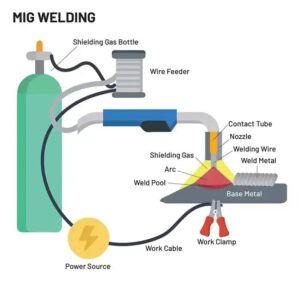
At its core, MIG welding needs a few key parts to function:
- Power source:Supplies the necessary electricity to melt the wire and base metals.
- Wire electrode:Acts as the filler material, fed through the welding gun continuously.
- Welding gun:Directs the wire and gas to the weld area.
- Shielding gas:Protects the molten weld pool from oxygen and contaminants.
- Ground clamp:Completes the electrical circuit by connecting the workpiece to the power source.
Each component must work together smoothly. If your wire feed isn’t steady, or your gas flow is off, your weld quality will suffer. Have you checked your setup recently to make sure everything is aligned?
Role Of Shielding Gas
The role of shielding gas in MIG welding is crucial yet often overlooked by beginners. It acts as a protective barrier during the welding process, directly affecting how clean and strong your weld turns out. Understanding this role can help you choose the right gas for your specific welding needs and improve your results dramatically.
Purpose Of Shielding Gas
Shielding gas protects the weld pool from atmospheric contamination. Without this protection, oxygen and nitrogen in the air can cause weld defects like porosity and weak joints. The gas flows around the weld area, creating a stable environment for the molten metal to solidify properly.
Different gases serve different purposes. For example, pure argon provides a smooth arc and clean welds on non-ferrous metals, while a mix of argon and carbon dioxide is common for welding steel. Your choice influences how the metal melts and fuses.
Impact On Weld Quality
The quality of your weld depends heavily on the shielding gas used. Using the wrong gas can lead to spatter, poor penetration, or brittle welds. Selecting the appropriate gas mix helps reduce defects and improves the strength and appearance of the weld.
Think about the last time you struggled with inconsistent weld beads or excessive smoke. It might have been due to incorrect shielding gas. Paying attention to this detail can save you time and materials, making your welding more efficient and reliable.
Types Of Gases Used
Choosing the right gas for MIG welding is crucial because it directly affects the quality of your weld and the ease of the process. Different gases serve different purposes, from protecting the weld pool to influencing the bead’s appearance and penetration. Understanding the types of gases used helps you make smarter decisions for your specific welding projects.
Common Gases In Mig Welding
The most widely used gases in MIG welding are Argon, Carbon Dioxide (CO2), and mixtures of these two. Argon is a noble gas that provides a stable, non-reactive shield around the weld, making it ideal for welding non-ferrous metals like aluminum.
CO2is more reactive and less expensive, often used for welding steel. It offers deeper penetration but can create more spatter, which means more cleanup. Many welders prefer a mix of Argon and CO2—commonly 75% Argon and 25% CO2—because it balances smooth welds with strong penetration.
- 100% Argon:Best for non-ferrous metals and thin materials.
- 100% CO2:Strong penetration for thick steel but more spatter.
- Argon-CO2Mix:Combines stability and penetration, great for mild steel.
Specialty Gases For Specific Applications
Sometimes, your project demands more than the common gases. Adding small amounts of oxygen or helium to Argon can change the weld characteristics significantly.
Oxygen added in small quantities (usually 1-5%) can improve arc stability and reduce spatter. Helium, on the other hand, increases heat input and penetration, which is useful for thicker materials or non-ferrous metals requiring deeper welds.
There are also rare blends like Argon-Helium-CO2mixtures designed for specific metals or welding positions. These specialty gases can be game-changers for tricky welding tasks, but they come with a higher cost and require fine-tuning your equipment.
- Argon + Oxygen:Better arc stability and bead shape.
- Argon + Helium:Increased heat and penetration.
- Custom Blends:Tailored solutions for unique welding needs.
What type of material are you welding right now, and have you experimented with different gas mixes? Sometimes, a small change in gas composition can make your welds stronger and cleaner without extra effort.
Argon In Mig Welding
Argon plays a crucial role in MIG welding by acting as a shielding gas that protects the weld area from contamination. It is an inert gas, which means it does not react with the molten metal during the welding process. This quality makes argon a preferred choice for many welders aiming for clean, strong welds.
Benefits Of Using Argon
Argon provides excellent arc stability, making the welding process smoother and easier to control. This stability helps you create consistent weld beads with less spatter, saving time on cleanup.
Because argon is heavier than air, it forms an effective shield over the weld pool, preventing oxidation and other atmospheric contamination. This leads to higher-quality welds with better appearance and strength.
Another key benefit is argon’s versatility. It works well with various metals, including aluminum, stainless steel, and carbon steel, allowing you to use it across different projects without switching gases frequently.
Applications Of Argon
Argon is commonly used in industries where precision and weld integrity are critical, such as automotive manufacturing and aerospace. If you’ve ever noticed the smooth, clean welds on a car frame, argon was likely part of the process.
It is also widely used in artistic metalwork and fabrication shops, where weld appearance matters as much as strength. When working with non-ferrous metals like aluminum, argon’s protective qualities help you avoid common issues like porosity and weak joints.
Have you considered how switching to argon might improve your own welding projects? Even if you work mostly with steel, mixing argon with small amounts of CO2 can optimize both cost and weld quality, offering a practical solution for many users.
Carbon Dioxide In Mig Welding
Carbon dioxide (CO2) is a common shielding gas used in MIG welding. It protects the weld pool from contamination by the air. CO2 is a pure gas and is often chosen for its cost-effectiveness. It produces a deep weld penetration, making it suitable for thick metals. Welders appreciate its strong arc and clean weld appearance. The choice of CO2 depends on the type of project and the metal used.
Advantages Of Co2
- Provides deep weld penetration for strong joints
- Cost-effective compared to mixed gases
- Produces a stable and strong arc
- Easy to use for beginners and professionals
- Good for welding thick steel materials
- Offers good weld bead appearance with less spatter
Suitable Projects For Co2
- Heavy steel fabrication and structural work
- Automotive repair and manufacturing
- Shipbuilding and large metal assemblies
- Construction of pipelines and heavy machinery
- Projects requiring deep weld penetration
- Outdoor welding where cost is a concern

Credit: www.adamsgas.co.uk
Gas Mixtures For Improved Results
Using the right gas mixture in MIG welding can improve weld quality and performance. Different gases change the weld’s heat, penetration, and appearance. Mixing gases helps welders get better control and cleaner welds. The choice depends on the metal type and welding conditions.
Popular Gas Mixtures
- Argon-CO2Mix: Usually 75% argon and 25% carbon dioxide. Offers good arc stability and less spatter.
- Argon-CO2-Oxygen Mix: Small oxygen addition, about 2-5%, improves arc start and bead shape.
- Argon-Helium Mix: Helium raises heat input for thicker metals. Common ratios are 75% argon, 25% helium.
- Pure CO2: Cheapest option, strong penetration, but more spatter and rougher welds.
Benefits Of Gas Mixtures
- Improves arc stability for smoother welding.
- Reduces spatter, saving time on cleanup.
- Enhances weld bead appearance and uniformity.
- Controls heat input to prevent metal warping.
- Increases penetration for stronger weld joints.
Selecting The Right Gas
Selecting the right gas for MIG welding is more than just picking what’s available. The gas you choose directly affects the quality, strength, and appearance of your welds. Understanding the specifics can save you time, money, and frustration in your projects.
Factors To Consider
Think about the type of metal you’re welding and the environment where you’ll work. Shielding gases protect the weld pool from contaminants, so the wrong gas can cause weak or porous welds.
Cost and availability also matter. Some gases like pure argon can be expensive, but they offer cleaner welds. On the other hand, mixed gases can balance cost and performance.
Consider the welding position and speed too. Certain gases enable faster welding or better control in tight spots, which can be crucial depending on your project.
Matching Gas To Material
Steel usually calls for a mix of argon and carbon dioxide. A common blend is 75% argon and 25% CO2, giving you smooth welds with good penetration.
For stainless steel, adding oxygen or helium to argon improves the weld’s appearance and strength. For example, a 90% argon and 10% helium mix helps reduce spatter and creates a cleaner finish.
Aluminum welding demands pure argon or argon-helium blends. Pure argon offers stable arcs, while adding helium increases heat for thicker pieces.
Ask yourself: what’s the metal thickness, and what’s your priority—speed, appearance, or weld strength? Your answers will guide your gas choice.
Optimizing Gas Usage
Optimizing gas usage in MIG welding saves money and improves weld quality. Proper gas control prevents waste and ensures consistent shielding. Using the right settings helps avoid porosity and weak welds. Small changes in gas flow can make a big difference. Understanding how to set and adjust gas flow is essential for every welder.
Proper Gas Flow Rates
Gas flow rate controls the amount of shielding gas protecting the weld. Too little gas causes contamination and porosity. Too much gas wastes gas and creates turbulence. The typical flow rate for MIG welding ranges between 20 and 30 cubic feet per hour (CFH). Adjust flow based on the welding environment:
- Higher flow in windy areas
- Lower flow in enclosed spaces
Use a flowmeter to measure gas flow accurately. Regularly check the flow to maintain optimal shielding. Proper flow rates improve weld appearance and strength.
Troubleshooting Common Issues
Gas-related welding problems often show as poor weld quality. Porosity, spatter, and oxidation signal gas issues. Check for leaks in hoses or fittings first. Replace damaged or worn parts immediately. Ensure the gas cylinder valve is fully open. Confirm that the flowmeter is functioning correctly.
Inconsistent gas flow may cause weld defects. Inspect the regulator for blockages or damage. Clean or replace parts as needed. Keep gas hoses away from sharp edges and heat. Proper maintenance reduces downtime and improves gas efficiency.

Credit: www.ssimder.com
Frequently Asked Questions
What Gas Is Commonly Used For Mig Welding?
MIG welding commonly uses a shielding gas mix of argon and carbon dioxide. This blend protects the weld from contamination and stabilizes the arc, ensuring clean, strong welds.
Why Is Argon Gas Preferred In Mig Welding?
Argon gas creates a stable arc and reduces spatter during MIG welding. It improves weld quality by shielding the molten metal from atmospheric gases like oxygen and nitrogen.
Can Co2 Be Used Alone In Mig Welding?
Yes, pure CO2 can be used alone in MIG welding. It is cost-effective and provides deep weld penetration but may cause more spatter compared to argon mixes.
What Is The Role Of Shielding Gas In Mig Welding?
Shielding gas protects the weld pool from oxygen and nitrogen in the air. This prevents weld defects like porosity and ensures a strong, clean weld bead.
Conclusion
Mig welding uses different gases to protect the weld. Commonly, argon and carbon dioxide are mixed for the best results. Pure carbon dioxide works well for thicker metals. The right gas helps make strong, clean welds. Choosing the correct gas depends on the metal and job type.
Understanding these gases helps improve welding quality. Keep this in mind for your next welding project. Simple choices lead to better welds every time.
About The Author

