
Imagine being able to weld metal with a process that is both efficient and produces high-quality results. If you work in industries where welding is a crucial part of the production process, understanding the best methods available can make a significant difference in your work.
That’s where Submerged Arc Welding (SAW) comes into play. This technique might not be as widely known as others, but it offers unique advantages that could revolutionize your approach to welding. Have you ever wondered how you can achieve seamless and strong welds without the hassle of sparks flying everywhere?
Submerged Arc Welding could be your answer. By the end of this article, you’ll not only grasp what Submerged Arc Welding is but also how it can enhance your projects with its remarkable efficiency and precision. Get ready to explore a welding method that could transform your work, making it easier and more effective than ever before.
Basics Of Submerged Arc Welding
Understanding the basics of Submerged Arc Welding (SAW) can open up a world of possibilities for you in the field of metalwork. This robust welding method is renowned for its efficiency and precision, making it a preferred choice in industries like shipbuilding and construction. If you’re looking to improve your welding skills or even just curious about the process, knowing the fundamentals is a great starting point.
What Is Submerged Arc Welding?
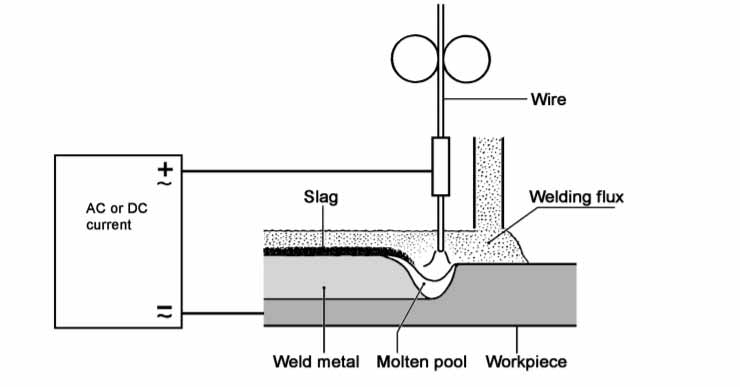
Submerged Arc Welding is a technique where the welding arc is submerged beneath a layer of granular flux. This protective blanket prevents spatter and shields the arc, allowing for deep penetration and strong welds. Unlike manual welding methods, SAW is typically automated, providing consistent results.
Components Of Submerged Arc Welding
- Electrode:Usually a continuous wire that serves as the filler material.
- Flux:Granular substance that covers the weld, protecting it from contamination.
- Power Source:Supplies the necessary electrical energy to create the arc.
- Welding Head:Holds the electrode and dispenses the flux.
The Process Of Submerged Arc Welding
SAW begins with setting up the welding machine and aligning the workpieces. As the arc ignites beneath the flux, it melts the electrode and the base material, forming a weld pool. The flux then melts and solidifies, creating a slag that covers the weld bead.
Submerged Arc Welding boasts several benefits. It offers high deposition rates, making it ideal for thick materials. The process is efficient and produces minimal fumes, ensuring a cleaner work environment. Additionally, the submerged arc yields high-quality welds with excellent mechanical properties.
Challenges And Considerations
While SAW is powerful, it’s not without challenges. The equipment can be bulky, requiring ample space for operation. It’s crucial to select the right flux and electrode for your specific material to avoid defects. Would you invest in SAW if it meant superior weld quality?
Engaging with SAW requires a keen eye for detail and practice. If you’ve ever tried it, you know the satisfaction of seeing a flawless weld come to life. Dive into the basics, and you might find yourself mastering this fascinating welding process.
Credit: www.cruxweld.com
How Submerged Arc Welding Works
Submerged Arc Welding (SAW) is a popular method for joining metals. It offers high quality and efficiency. Understanding how SAW works is crucial for effective application.
Equipment And Setup
SAW requires specific equipment. A welding machine is essential. This machine provides the necessary current. It also includes a wire feeder. The wire feeder supplies the electrode continuously.
A flux hopper is another key component. This hopper holds the granular flux. The flux covers the welding area. This prevents contamination during welding.
A welding tractor or carriage is used for movement. This ensures steady progress along the weld joint.
Welding Process Steps
The welding process starts with preparation. Clean the metal surfaces thoroughly. Align the pieces accurately for a perfect joint.
Next, set up the equipment properly. Ensure the flux covers the joint completely. Adjust the wire feeder for a smooth flow.
Initiate the welding machine. Start the arc beneath the flux layer. The arc melts the electrode and base metal.
The molten pool forms. The flux shields the pool from the air. It also stabilizes the arc and shapes the weld.
The welding carriage moves along the joint. This keeps the process uniform and consistent. Cool the weld gradually for optimal strength.
Advantages Of Submerged Arc Welding
Submerged Arc Welding (SAW) offers numerous advantages. These benefits make it a preferred choice in many industries. The process is well-known for its efficiency and high-quality results. Safety and cleanliness are also major advantages. Let’s explore these aspects in detail.
Efficiency And Speed
SAW is fast. It uses continuous wire feeding for welding. This speeds up production. It allows for long welds without stopping. Less downtime means more productivity. Time is saved, costs are reduced.
Quality Of Welds
SAW produces high-quality welds. It creates deep penetration and strong bonds. The welds are consistent and defect-free. This ensures durability. Quality control is easier with SAW.
Safety And Cleanliness
SAW is safer. The arc is submerged under flux. This reduces exposure to light and heat. It minimizes harmful emissions. The work area stays clean. Workers benefit from a healthier environment.

Credit: en.wikipedia.org
Limitations Of Submerged Arc Welding
Submerged Arc Welding involves welding beneath a blanket of flux. It offers high-quality welds but has limitations. It’s not suitable for thin materials and is less effective in vertical or overhead positions. Additionally, the process requires precise equipment setup, making it less flexible for field applications.
Submerged Arc Welding (SAW) is a reliable and efficient welding process commonly used in industrial applications. However, like any technology, it has its limitations. Understanding these limitations can help you make informed decisions on when and where to use SAW. Knowing its constraints ensures you get the best results while avoiding potential pitfalls.Material Compatibility
SAW is not compatible with all materials. It’s primarily used for welding steel and its alloys. If you’re working with non-ferrous metals like aluminum or copper, SAW might not be the best choice. This limitation arises because the process relies on a flux to shield the weld, which interacts differently with various metals. Imagine trying to mix oil and water; they just don’t blend seamlessly. You may find that using SAW on inappropriate materials leads to weak welds or structural failures. Have you encountered this in your projects? A practical solution could be to consider alternative welding methods tailored for your specific materials.Position Limitations
SAW is most effective in flat or horizontal positions. It struggles with vertical or overhead applications. This constraint can be a significant hurdle if your project requires welding in diverse orientations. Imagine trying to pour a bucket of water upside down; it’s messy and inefficient. Similarly, SAW’s reliance on gravity-fed flux limits its versatility in different positions. If your work involves complex geometries, you might need to explore other welding techniques. Have you ever faced challenges with position limitations? Perhaps employing a flexible welding method can save you time and resources. Understanding the limitations of Submerged Arc Welding is crucial for optimal performance. By recognizing these constraints, you can better plan your welding projects and choose the most suitable techniques for your needs. What other welding challenges have you faced, and how did you overcome them?Applications Of Submerged Arc Welding
Submerged Arc Welding (SAW) is a robust welding technique. It is widely used for joining large metal sections efficiently. The applications of SAW span across various industries and projects. Its ability to produce high-quality welds makes it a preferred choice for many.
Industrial Uses
SAW is essential in the manufacturing sector. It is commonly used in the construction of pipes and pressure vessels. These applications demand strong, reliable welds. The automotive industry also benefits from SAW. It ensures the durability of heavy-duty vehicles and components. Shipbuilding relies on SAW to join large sections of hulls. This method provides the strength required for maritime structures. SAW is also prevalent in the fabrication of structural steel. It is vital for building bridges and large frameworks.
Common Projects
SAW is often used in repairing industrial machinery. It ensures the longevity of equipment by reinforcing weak joints. It is also used in the production of oil rigs and offshore platforms. These projects require the reliability that SAW offers. The construction of storage tanks also utilizes SAW. It provides secure and leak-proof welds necessary for containment. Railroads use SAW for track construction and maintenance. This ensures the stability and safety of rail transport systems.
Types Of Submerged Arc Welding
Submerged Arc Welding (SAW) is a versatile and efficient welding process used across various industries. It’s particularly known for its ability to produce high-quality welds with minimal operator intervention. But did you know that there are different types of SAW techniques? Each type offers unique benefits and is suited for specific applications. Understanding these can help you choose the right method for your projects, ensuring optimal results. Let’s dive into the different types of Submerged Arc Welding.
Single Wire
The Single Wire SAW method is the simplest form of this welding process. It uses a single consumable wire electrode that is continuously fed into the weld. This technique is great for smaller projects or where precision is key.
Operators often prefer this method for its straightforward setup and ease of use. Imagine you’re working on a small metal frame for a piece of furniture—Single Wire SAW provides the control you need without overwhelming complexity. It’s a reliable choice when you need to get the job done efficiently.
Twin Wire
Twin Wire SAW introduces a second wire into the mix, which can significantly boost your welding speed. This method uses two wires fed simultaneously, allowing for faster deposition rates. It’s a game-changer for larger projects where time is of the essence.
Think about a scenario where you’re tasked with welding large steel plates for a bridge. The Twin Wire approach not only speeds up the process but also maintains the quality of the weld. This balance of speed and quality makes it a popular choice in heavy industries.
Multiple Wire
Multiple Wire SAW takes the concept of Twin Wire even further by using more than two wires. This method is ideal for extremely large projects demanding high production rates. It’s like having an entire team working on the weld simultaneously.
Consider a massive shipyard operation where welding needs to be performed on a colossal scale. Multiple Wire SAW can handle such demands effortlessly, making it indispensable for industrial-scale applications. Have you ever wondered how such massive structures are welded with precision? Multiple Wire SAW might be the answer.
Each of these SAW types serves a specific purpose and offers distinct advantages. Understanding them can empower you to make informed decisions on your next welding project. Which type of SAW do you think would best suit your needs?
Materials And Consumables
Submerged Arc Welding (SAW) uses a continuously fed wire electrode and a blanket of granular flux. This method shields the weld zone from contaminants. Common materials include steel and alloys, while consumables involve wire and flux.
Understanding the materials and consumables in Submerged Arc Welding (SAW) is crucial for achieving high-quality welds. These elements not only determine the strength and durability of the weld but also impact the efficiency of the welding process. Choosing the right materials can be the difference between a seamless weld and one that falls short.Electrodes
In SAW, electrodes are vital as they supply the filler metal to the weld joint. The choice of electrode can drastically affect the weld’s characteristics. Commonly, you’ll find electrodes made from mild steel, stainless steel, and sometimes nickel or other alloys. Each type of electrode serves a specific purpose. For instance, mild steel electrodes are often used for their strength and cost-effectiveness. On the other hand, stainless steel electrodes are preferred for their corrosion resistance. Think about the environment your weld will face. Is it corrosive? If so, opting for a stainless steel electrode might be your best bet.Flux Types
Flux in SAW is used to shield the weld from contamination and to stabilize the arc. The type of flux you use can impact the mechanical properties and appearance of the weld. There are two main types of flux: fused and bonded. Fused flux is created by melting and cooling the ingredients, resulting in a glassy substance. This type is great for applications requiring deep penetration and high weld quality. Bonded flux, on the other hand, is made by mixing ingredients with a binder. It offers flexibility in adjusting the chemical composition. For instance, if you need a weld with specific mechanical properties, a bonded flux might be ideal. Choosing the right flux involves understanding your welding requirements. Do you need a visually appealing weld or one with strong mechanical properties? Your choice should reflect these needs.These decisions will directly impact the efficiency and quality of your welding process. What are your key considerations when selecting materials for your welding projects? Share your thoughts in the comments.
Best Practices In Submerged Arc Welding
Submerged Arc Welding involves a continuously fed electrode under a protective blanket of granular flux. This process ensures deep penetration and minimal spatter. Its efficiency and quality make it ideal for thick and large metal sections.
Submerged Arc Welding (SAW) is a highly efficient welding process used extensively for large-scale applications. Mastering the best practices can significantly enhance the quality and durability of your welds. Whether you’re a seasoned welder or just starting, understanding these practices is essential. From preparation to ongoing maintenance, each step plays a crucial role in achieving optimal results. Have you ever wondered what small adjustments could make a significant difference in your welding projects? Let’s dive into the details.Preparation And Setup
Proper preparation is the cornerstone of successful submerged arc welding. Begin by thoroughly cleaning the surfaces to remove any dirt, rust, or oil. This step is crucial to ensure a strong bond between materials. Make sure you select the right welding parameters based on the materials and thickness you’re working with. Adjust the voltage, current, and travel speed accordingly. Set up your equipment carefully. Ensure the welding machine and flux are in good condition. Check that the wire feed is consistent and smooth. A solid setup can prevent unexpected issues during the welding process.Maintenance And Troubleshooting
Regular maintenance of your welding equipment is vital. Inspect cables, connections, and the machine’s internals. Replace worn parts promptly to avoid interruptions. Troubleshooting is an inevitable part of the process. If you encounter issues like poor arc stability or excessive spatter, examine your setup. Adjust the parameters and check for blockages in the flux delivery system. Keep a log of common problems and solutions. This can save time and effort in future projects. Do you have a go-to method for troubleshooting? Share your insights with fellow welders. By focusing on these best practices, you can enhance your submerged arc welding outcomes significantly. Embrace the challenges, learn from each weld, and continuously improve your skills. What step will you focus on improving next?Safety Precautions
Safety is crucial in submerged arc welding (SAW). This process involves high temperatures and electric currents. Proper precautions ensure the safety of workers and equipment. Below are key safety measures that must be followed.
Personal Protective Equipment
Welders should wear flame-resistant clothing. This prevents burns from sparks and molten metal. A welding helmet with a dark lens protects eyes from arc rays. Gloves made of leather offer protection from heat and electric shock. Steel-toed boots shield feet from heavy objects and hot metal.
Work Environment Safety
The work area should be clean and organized. Remove flammable materials to prevent fire hazards. Ensure proper ventilation to avoid inhaling harmful fumes. Maintain a safe distance from the welding arc to reduce exposure to radiation. Use barriers or screens to protect others in the vicinity.

Credit: www.canambridges.com
Frequently Asked Questions
What Is Submerged Arc Welding Used For?
Submerged arc welding (SAW) is used for welding thick steel sections. It is commonly used in the construction of pipelines, pressure vessels, and large structural components. The process offers high efficiency and deep penetration, making it ideal for heavy industrial applications requiring strong and durable welds.
How Does Submerged Arc Welding Work?
Submerged arc welding works by feeding a continuous wire electrode and granular flux into the weld area. The flux covers the arc, preventing exposure to air and contaminants. This results in a clean weld with minimal spatter. The process is automated, providing consistent and high-quality welds, especially for large-scale projects.
What Are The Advantages Of Saw?
SAW offers several advantages, including high deposition rates and excellent weld quality. It provides deep penetration and minimal distortion, making it suitable for thick materials. The submerged arc prevents spatter, ensuring a clean work area. Additionally, the process is highly automated, reducing labor costs and increasing efficiency.
Is Saw Suitable For All Materials?
SAW is primarily suitable for welding steel and stainless steel materials. It’s not ideal for non-ferrous metals like aluminum or copper. The process requires consistent material thickness and is best suited for applications involving large, flat, or slightly curved surfaces.
Material compatibility should be assessed before selecting SAW.
Conclusion
Submerged Arc Welding (SAW) is a vital technique in metalwork. It provides strong, clean welds with minimal splatter. This method is ideal for thick materials. Industries like shipbuilding and construction often use SAW. Its efficiency and high-quality results make it popular.
Operators need proper training for safety and precision. Understanding SAW’s basics helps in choosing the right welding method. Whether for large projects or specific tasks, SAW offers reliability. It stands out for its consistency and performance. For those in welding, SAW is a valuable tool.
A true asset in the world of metal joining.
About The Author

