
If you want to get the best results from your MIG welding, understanding the right gas to use is crucial. The gas you choose affects the strength, appearance, and quality of your welds.
But with so many options out there, how do you know which one fits your project? This guide will help you discover exactly what gas is needed for MIG welding and why it matters to your work. Keep reading to make sure your next weld is strong, clean, and professional every time.
Basics Of Mig Welding
MIG welding is a popular technique for joining metals using a continuous wire electrode. It is widely used in industries and DIY projects due to its efficiency and ease of use. Understanding the basics of MIG welding helps in choosing the right gas and equipment for quality results.
Process Overview
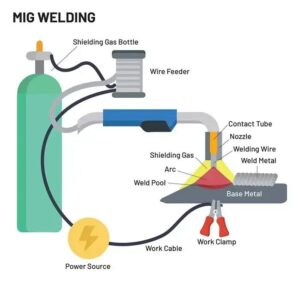
MIG welding stands for Metal Inert Gas welding. It uses a wire that melts and joins metal pieces. The wire feeds automatically from a spool. A shielding gas flows around the wire to protect the weld from air contamination. This gas keeps the weld clean and strong.
The welder controls the speed and heat. The process is fast and creates smooth welds. It works on many metals like steel, aluminum, and stainless steel. Proper gas choice is key to avoid weld defects.
Equipment And Materials
Basic MIG welding setup includes a power source, wire feeder, welding gun, and shielding gas supply. The power source provides electric current. The wire feeder sends wire through the gun to the weld pool.
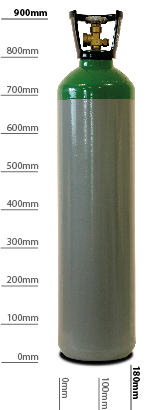
Shielding gas is stored in a cylinder and connected to the gun. The welding wire comes in spools of various sizes. Metal pieces must be clean and fit well for strong joints. Safety gear like gloves and helmets protect the welder from sparks and UV light.
Credit: westairgases.com
Role Of Shielding Gas
The role of shielding gas in MIG welding is vital. It protects the weld pool from air contamination. Without shielding gas, welds can have defects and weak spots.
Shielding gas flows over the weld area, creating a protective barrier. This barrier keeps oxygen, nitrogen, and hydrogen from mixing with molten metal. These gases cause porosity, brittleness, and poor weld appearance.
Why Shielding Gas Is Important
Shielding gas prevents oxidation during welding. It stops air from reacting with the hot metal. Oxidation weakens the weld and causes rust later.
The gas also stabilizes the electric arc. A stable arc means smoother and more controlled welding. This helps create cleaner and stronger welds.
Effects On Weld Quality
The type of shielding gas impacts weld quality. Pure argon gas produces a smooth, clean weld. Argon mixed with carbon dioxide offers good penetration and less spatter.
Using the wrong gas can cause defects like:
- Porosity (tiny holes)
- Cracks in the weld
- Weak joint strength
- Uneven bead shape
Choosing the correct shielding gas improves weld strength and appearance. It also reduces the need for rework and saves time.
Common Shielding Gases
Shielding gases protect the weld pool from contamination. They stop oxygen and nitrogen from weakening the weld. Choosing the right gas affects weld quality and appearance. Different gases suit different metals and conditions.
Argon
Argon is a popular shielding gas for MIG welding. It is a noble gas, which means it is very stable. Argon produces a smooth, clean weld. It works well with non-ferrous metals like aluminum and copper. Argon also helps reduce spatter and improves arc stability.
Carbon Dioxide
Carbon dioxide (CO2) is a common and cost-effective gas. It gives deep weld penetration. CO2is often used for welding steel. It can cause more spatter than argon but creates strong welds. Pure CO2is less expensive but may produce rougher welds.
Gas Mixtures
Gas mixtures combine argon and carbon dioxide for better results. Common blends include 75% argon and 25% CO2. These mixtures balance weld quality and cost. They offer smoother arcs and less spatter than pure CO2. Some mixes add oxygen or helium to improve arc stability and weld bead shape.
Credit: www.adamsgas.co.uk
Choosing The Right Gas
Choosing the right gas for MIG welding is vital for strong, clean welds. The gas affects the weld quality and how easy it is to work with the metal. Different gases suit different metals and welding conditions. Understanding your options helps you pick the best gas for your project.
Material Considerations
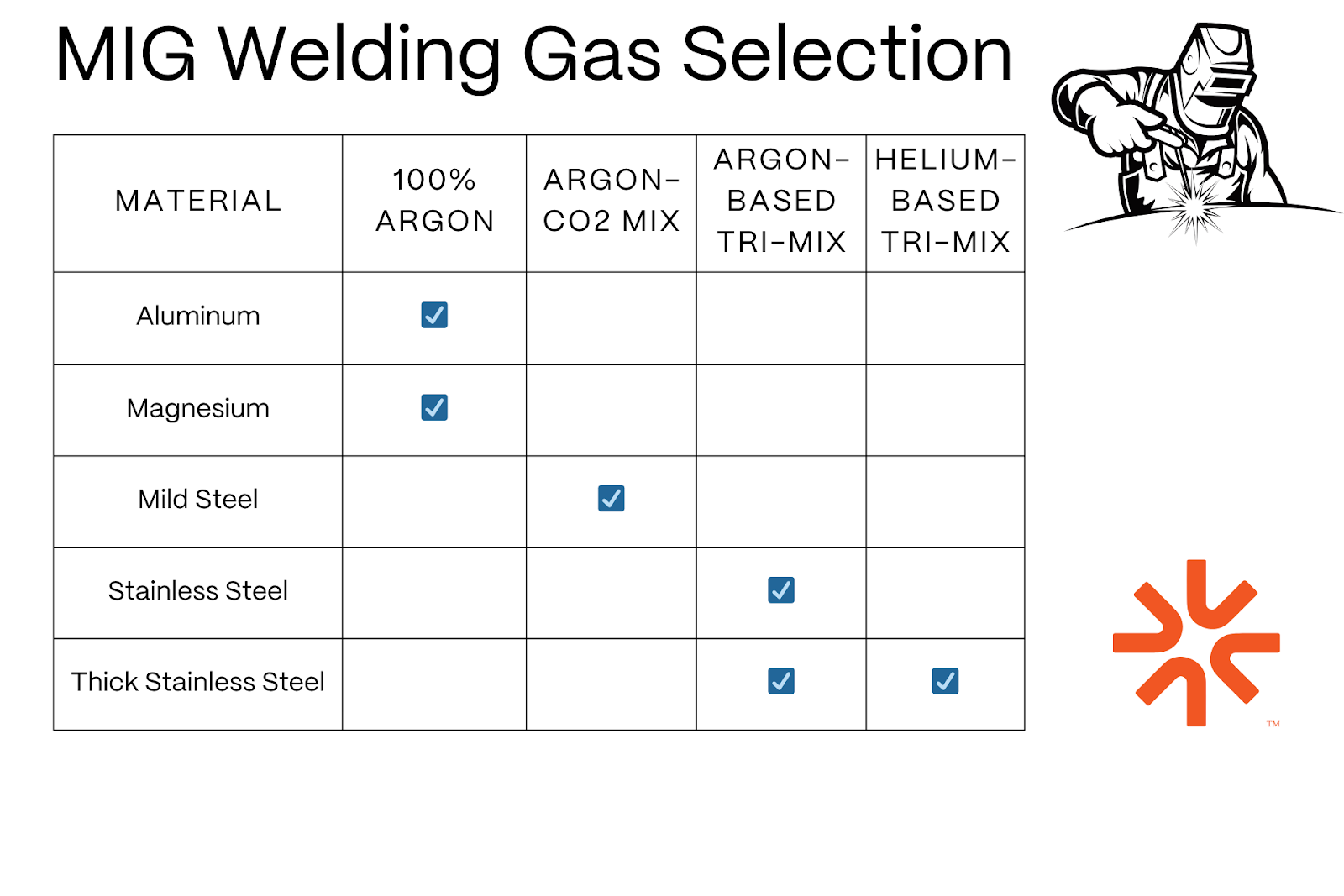
Different metals need different shielding gases. Steel usually requires a mix of argon and carbon dioxide. Aluminum often uses pure argon for a smooth finish. Stainless steel benefits from argon with small amounts of oxygen or helium. Match the gas to the metal for better weld penetration and less spatter.
Cost And Availability
Some gases cost more and may be hard to find. Carbon dioxide is usually cheaper and widely available. Argon is more expensive but offers cleaner welds. Mixed gases cost more but improve weld quality. Think about your budget and what gases local suppliers offer before deciding.
Environmental Factors
Some gases produce more fumes or require special handling. Carbon dioxide creates more smoke during welding. Argon and helium are cleaner and safer for indoor use. Consider ventilation and safety rules where you weld. Using the right gas reduces health risks and keeps the work area safer.
Gas Flow Rate And Pressure
Gas flow rate and pressure play a crucial role in MIG welding. They control the shielding gas that protects the weld pool from contamination. Proper flow and pressure ensure clean, strong welds without defects. Too much or too little gas can cause issues like porosity or weak joints.
Setting the right flow rate and pressure depends on the type of gas, welding speed, and environmental factors. Welders must adjust these settings carefully for the best results. Understanding how to manage gas flow and pressure helps improve welding quality and efficiency.
Optimal Settings
For most MIG welding applications, a flow rate between 20 and 25 cubic feet per hour (CFH) works well. This range protects the weld pool without wasting gas.
Pressure should be enough to maintain a steady flow through the nozzle. Typically, this means around 10 to 15 psi at the regulator.
Too high flow can cause turbulence, drawing air into the weld. Too low flow leaves the weld unprotected.
Adjustments For Different Conditions
Windy or drafty environments require higher gas flow to maintain shielding.
For indoor welding, lower flow rates usually suffice.
Thicker materials or faster welding speeds might need increased flow to cover a larger weld pool.
Always monitor the weld appearance and adjust flow and pressure as needed.

Credit: www.linkedin.com
Troubleshooting Gas Issues
Gas issues during MIG welding can cause frustration and affect the quality of your welds. Identifying and fixing these problems quickly keeps your work clean and efficient. Understanding common gas-related issues helps you avoid downtime and costly mistakes.
Common Problems
One frequent issue is an inconsistent gas flow. This can lead to porosity in the weld, making it weak and unattractive.
Another problem is using the wrong type of shielding gas. For example, pure CO2 might cause more spatter compared to a mix of argon and CO2.
Leaks in hoses or connections often go unnoticed but cause a drop in gas pressure. This reduces the protective shield over the weld pool, inviting contamination.
Solutions And Tips
- Check gas flow rate:Use a flow meter and adjust to the recommended setting, typically between 20-25 cubic feet per hour (CFH).
- Inspect connections:Tighten hose fittings and replace any damaged seals to prevent leaks.
- Choose the right gas:Match your metal type and welding application. For mild steel, a 75% argon/25% CO2 mix often works best.
- Look for signs of contamination:If your weld has excessive porosity, try increasing the gas flow or switching to a purer argon blend.
- Test for leaks:Apply soapy water to hose connections and watch for bubbles to spot leaks quickly.
Have you ever stopped mid-weld only to realize your gas tank was almost empty? Keeping an eye on your gas levels can save you from unexpected interruptions and poor weld quality. Regular maintenance and careful monitoring of your gas setup help you avoid common pitfalls and achieve consistent, strong welds every time.
Safety Precautions
Safety is crucial when working with MIG welding gases. These gases can be dangerous if not handled correctly. Knowing the right safety steps helps prevent accidents and health risks. Proper safety measures protect both the welder and the workspace.
Handling And Storage
Store gas cylinders upright and secure them to prevent tipping. Keep them away from heat, flames, and sparks. Always close valves tightly after use. Use proper equipment to move cylinders safely. Avoid dropping or striking the cylinders.
Protective Gear
Wear a welding helmet with a proper shade lens. Use flame-resistant gloves and clothing. Protect your eyes from bright light and sparks. Ensure good ventilation to avoid inhaling harmful gases. Use respirators if working in confined spaces.
Frequently Asked Questions
What Gas Is Commonly Used For Mig Welding?
Argon and carbon dioxide are the most common gases for MIG welding. Argon provides a stable arc and smooth welds. Carbon dioxide offers deeper penetration and is cost-effective. Often, a mix of both gases is used for optimal results.
Why Is Argon Gas Preferred In Mig Welding?
Argon gas creates a stable, clean welding arc. It reduces spatter and improves weld appearance. Argon is ideal for welding non-ferrous metals like aluminum and copper. Its inert nature protects the weld from contamination.
Can Carbon Dioxide Be Used Alone In Mig Welding?
Yes, carbon dioxide can be used alone in MIG welding. It provides deep weld penetration but can produce more spatter. It is cost-effective and commonly used for welding steel. However, a gas mix often yields better weld quality.
What Gas Mixture Is Best For Mig Welding Steel?
A common mix for welding steel is 75% argon and 25% carbon dioxide. This blend balances smooth arc stability and strong weld penetration. It reduces spatter and improves overall weld quality. Many welders prefer this mixture for steel projects.
Conclusion
Choosing the right gas for MIG welding affects weld quality. Shielding gases protect the weld from air and dirt. Pure argon or argon mixes work best for many metals. Using the correct gas helps create strong, clean welds. Always check the metal type before picking gas.
Proper gas use saves time and reduces welding problems. Keep your equipment ready and gas flow steady. Good gas choice leads to better welding results every time.
About The Author

